Sound Films D
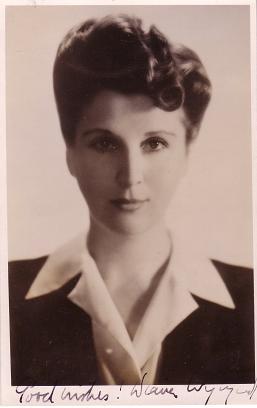
Diana Wynyard
Hedy Lamarr
NEW SPECIAL NO FRILLS OFFER – NO ARTWORK OR CASES, SHIPPED IN PAPER SLEEVES. 3 FILMS FOR £20.00, 5 FILMS FOR £30.00 OR 10 FILMS FOR £50.00 AND NO ADDITIONAL POSTAGE CHARGES ANYWHERE IN THE WORLD!! NEW
NEW HAVE YOUR FILMS DELIVERED BY FILE TRANSFER DIRECTLY TO YOUR HOME COMPUTER FOR JUST £5.00 PER TITLE NEW
DOA (1950)
Starring Edmund O'Brien. Small-
Dainah La Metisse (1932)
Directed by Jean Gremillon and starring Charles Vanel, this is an excellent print of the film with a runtime of 48 mins. The film is French language with English subtitles.
The plot: Going on a cruise ship,husband and wife Dainah Smith & "Le mari" (who also
performs magic tricks for the passengers) see the flaws in their marriage laid bare,due
to Smith flirting with everyone.Getting close to Smith,cruise ship crew member Le
mécanicien Michaux tries to get near Smith,but is firmly pushed away.Waking up the
next day,Mari is horrified to discover that Smith has been thrown overboard.
View
on the film: For what was only his second "talkie",director Jean Grémillon displays
an expert poetic quality which heats rich Shakespeare Melodrama with jagged surrealism.Gliding
across the cruise ship, Grémillon heightens Dainah & "Le mari" relationship in startling
surrealism,via Grémillon shaking "Le mari' performing magic tricks to hauntingly
masked passengers,and the blazing gaze of a Greek Chorus across the board. Firmly
standing out in the early 30's by the splendidly earthy Habib Benglia and Laurence
Clavius being two black actors who take on the lead roles, Grémillon links surrealism
with brittle Melodrama which casts lingering shadows of doom over the ship,and makes
"mari" and Michaux (played by a wonderfully blunt Charles Vanel) final cruise one
which lands on a harsh Film Noir shore.
Inspired by Shakespeare's Othello,the screenplay
by Charles Spaak takes a brilliantly subtle,mature approach to the themes,as "mari"
is pushed by the ships crew to the sidelines,whilst Mari's fellow guests show how
dispensable his love is,by continuing to drink up every drop of glitz on the ship.
Inadvertently assisted by the studio taking the project from Grémillon,Spaak sows
icy seeds of doubt over how Smith fell into the sea of death,that causes Mari to
put the breaks on Dainah Smith's ship…..£7.49
Dakota (1945)
Directed by Joseph Kane and starring John Wayne, Vera Ralston and Walter Brennan, this film has a runtime of 78 mins and the print quality is very good to excellent.
Plot: In 1871, professional gambler John Devlin elopes with Sandra "Sandy" Poli, daughter of Marko Poli, an immigrant who has risen to railroad tycoon. Sandy, knowing that the railroad is to be extended into Dakota, plans to use their $20,000 nest egg to buy land options to sell to the railroad at a profit. On the stage trip to Ft. Abercrombie, their fellow passengers are Jim Bender and Bigtree Collins, who practically own the town of Fargo and Devlin is aware that they are prepared to protect the little empire... trying to drive out the farmers by burning their property, destroying their wheat, and blaming the devastation on the Indians. Continuing their journey north on the river aboard the "River Bird', Sandy and John meet Captain Bounce, an irascible old seafarer. Two of Bendender's henchmen, Slagin and Carp, board the boat and relieve John of his $20,000 at gunpoint. Captain Bounce, chasing the robber's dinghy, wrecks his boat on a sandbar. At Fargo, the land wars begin and John teams with the wheat farmers against the Bender gang. Several attempts are made on his life and Collins tries to frame him for murder.
Review: I thoroughly enjoyed this early movie with John Wayne. He was very good in
his part I thought. He was truly becoming the guy most Americans Identify with. I
read elsewhere that movies Vera Ralston appeared in did not make money. I'm not sure
why unless Americans just had a hard time with her accent. She was lovely, acted
her part well, even added a good degree of humor from time to time. This movie was
released on Christmas day 1945. I wonder if folks were so happy to have the war over
and short of cash that they passed on the movie for those two reasons. John was well
liked by then so he should have been a box office draw,0 and Vera was not well known
such that she would be a deterrent.
Anyway, I liked it. Hope you do too….£7.49
Damaged Lives (1933)
Starring Marceline Day and Jason Robards…..£7.49
Dames (1934)
Starring Dick Powell and Ruby Keeler…..£7.49
Damsel in Distress, A (1937) **UPGRADE – Improved print**
Directed by George Stevens and starring Fred Astaire, George Burns, Gracie Allen, Joan Fontaine, Reginald Garginer, Ray Noble, Constance Collier and Montagu Love, this film has a runtime of 101 mins and the print quality is excellent.
Plot: Lady Alyce Marshmorton must marry soon, and the staff of Tottney Castle have laid bets on who she'll choose, with young Albert wagering on "Mr. X". After Alyce goes to London to meet a beau (bumping into dancer Jerry Halliday, instead), she is restricted to the castle to curb her scandalous behavior. Albert then summons Jerry to Alyce's aid in order to "protect his investment".
Review: A DAMSEL IN DISTRESS (RKO Radio, 1937), directed by George Stevens, stars
Fred Astaire in his first starring musical without his famous and most frequent co-
The plot revolves around Jerry Halliday (Fred Astaire), an American entertainer
vacationing in England accompanied by his publicity agent, George Burns (George Burns)
and stenographer, Gracie Allen (Gracie Allen). Then there's Lady Alyce Marshmorton
(Joan Fontaine) of Totley Castle, on her way to London for a secret rendezvous with
Geoffrey, a young American she met in Switzerland a year ago. To lose the following
Kegs (Reginald Gardiner), her family butler, and Albert (Harry Watson), the page
boy, Alyce hides inside the backseat a cab where she encounters its passenger, Jerry.
Misunderstanding occur when both Kegs and Albert mistake Jerry for Alyce's Mr. X.
As for Jerry, he comes to the conclusion the young lady's in distress. Upon Alyce's
return home, her Aunt Caroline (Constance Collier) confines her to the suburban estate,
while her easy-
Song interludes
include: "I Can't Be Bothered Now" (sung by Fred Astaire); "The Jolly Tar and the
Milkmaid," "Put Me to the Test" (instrumental dance with Astaire, Burns and Allen);
"Stiff Upper Lip" (sung by Gracie Allen/danced by Astaire, Burns and Allen); "Things
Are Looking Up" (sung by Astaire/danced by Astaire and Fontaine); "Nice Work If You
Can Get It," "Ah Chi A Uoi Perdini Iddio" from the opera MARTA (performed/voice dubbed
by Reginald Gardiner), and "Nice Work If You Can Get It" (reprise, drum solo/ dance
by Astaire). Fascinating Rhythm.
For an Astaire musical, there isn't much dancing,
but when there is, it makes up for some dull spots. Aside from brief dance solo by
Astaire on the foggy London streets, and another with drums, his two with George
and Gracie comes as a surprise for anyone familiar with Burns and Allen as a comedy
team -
As with 1937 theater goers, I didn't
particularly care for A DAMSEL IN DISTRESS when I first watched this on commercial
television (New York City's WOR-
When presented on American
Movie Classics prior to 2001, audio for A DAMSEL IN DISTRESS was in desperate need
of restoration. However, current prints shown on Turner Classic Movies is much better
in both visuals and audio. Distributed to home video in the 1980s from Nostalgia
Merchant, A DAMSEL IN DISTRESS is also available on DVD. And be sure not to miss
Astaire's attempt in duplicating Leonard's Leap. Nice work if you can get it. (***1/2)…..£7.49
Dance Fools, Dance (1931) **UPGRADE -
Directed by Harry Beaumont and starring Joan Crawford, Clark Gable, Cliff Edwards and Lester Vail, this film has a runtime of 80 mins and the print quality is very good to excellent.
Plot: After the death of her father and loss of the family fortune, Bonnie gets a job as a cub reporter while her brother becomes involved in bootlegging.
Review: Don't listen to fuddy-
But none of this is supposed
to be taken seriously -
Dance Hall (1929) **UPGRADE – Much improved print**
Directed by Melville Brown and starring Olive Borden, Arthur Lake, Ralph Emerson and Margaret Seddon, this early sound film has a runtime of 59 mins and the print quality is excellent.
Plot: A dance trophy winning young couple is temporarily split up when a playboy aviator leads the girl to believe he's in love with her.
The soundtrack is dubbed on to an already finished film. The actors' voices say the
words but are just a little off, sometimes speaking too fast or slow (sometimes in
the same scene) to perfectly match their onscreen selves' mouth movements. Sound
effects also can be similarly affected. It's obviously a talkie, and is definitely
not a case of an out-
Review: Hollywood obviously saw potential in Arthur Lake, even though talkies revealed
his to be the whiniest voice ever -
Tommy
Flynn (Lake) has three loves, dancing, beautiful Gracie (Olive Borden is very fetching
as a blonde) and his mother, who keeps his dancing cups polished on the mantle for
him. Just as they are about to enter yet another dance contest, Gracie meets playboy
aviator, Ted Smith, and instantly falls for his lies. For me, there is not enough
dancing in it -
The plane didn't
go down and Ted is back, hale and hearty, and in the arms of his old steady Bee -
Definitely not the worst film I have seen from this period. Films
of this early vintage occasionally had lip synching problems, it was just that in
"Dance Hall" the synching was out for the entire movie!! RKO and Radio had merged
the year before and decided they would only produce talking films so they developed
the sound on film Photophone system which also had a synchronized disc system as
well. The adverts at the time claimed it was superior and clearer than any other
system -
Vina Delmar was a young
writer of racy tales who hit pay dirt with her first novel "Bad Girl" which was turned
into a Broadway play (with Sylvia Sidney) then a movie (with Sally Eilers). "Dance
Hall" was her first story written directly for the screen. ….£7.49
Dance Hall Racket (1953)
Starring Lenny Bruce and Timothy Farrell…..£7.49
Dance of Life, The (1929)
Directed by John Cromwell and A.Edward Sutherland and starring Hal Skelly, Nancy Carroll and Dorothy Revier, this film has a runtime of 112 mins and the print quality is very good. The film was originally released with Technicolor sequences, which sadly seem to be lost, so this is the purely black and white version.
Review: Here's one of the early talkies that has been readily available to home video,
but one I've avoided. An early musical, and yet another "backstage" plotline, this
was something I've seen done so poorly elsewhere I suspected I'd wind up throwing
things at my TV. [Have any of you anguished your way through the musical numbers
of The Great Gabbo?] Happily, such was not the case. Here is a film totally accessible
to contemporary audiences.
A big film in its time, Paramount popped for Technicolor
and assigned it's two top directors, Cromwell and Sutherland. [The directors appear
in cameos as doorman and theatre attendant, respectively.] Musical sequences are
well done and entertain. Cringe factor on a one to five scale, one. The wonder of
seeing the tall, lanky Skelly and diminutive Carroll dancing in perfect unison is
still with me. They're the most unlikely team this side of Laurel and Hardy.
Many
other splendid differences between this film and its contemporaries are worth noting.
Released August, 1929, Paramount's superimposed credits seem so much more modern
than the silent card graphics MGM still used. Not everyone cares to know who the
associated producer is, we want entertained. Behind The Dance Of Life, silhouetted
stage hands scurry about, pulling backdrops and riggings. You're treated to seeing
behind the scenes while the obligatory texts play out. The ensemble cast has antagonists
which prove to be red herrings. It's loaded with interesting camera compositions.
A train is gained and quit at night in a pouring rainstorm. A sandwich is used as
a romantic device. And what I enjoyed the most was the personal and up close feeling
the directors give scenes. Skelly, after pratfalling from wing to wing, sings "True
Blue Lou" so personally it would seem he was oblivious to the camera which closed
in three times during the song.
A snapshot of a lost form of American entertainment,
The Dance Of Life stands apart from its roots as a great film. See it!....£7.49
Dandy Dick (1935)
Starring Will Hay…..£7.49
Dangerous Curves (1929) **UPGRADE – Much improved print**
Directed by Lothar Mendes and starring Clara Bow, Richard Arlen, Kay Francis and David Newell, this film has a runtime of 77 mins and the print quality is very good to excellent.
Plot: A young bareback rider in a circus is in love with a trapeze artist, but he has two problems: he drinks too much and he's fallen under the spell of a "vamp" who's nothing but trouble for him.
Review: I saw this movie in the theatre and I wasn't that impressed with the actual film, but Clara Bow blew me away. She was confident, sparkling, and beautiful; practically playing herself, utilizing that Brooklyn accent to the hilt! Kay Francis also does a good job as the villainess. So much so that I disliked her character. The circus setting didn't turn me on that much, but some of the situations and dialogue were interesting and all the actors involved did a decent job. Recommended for Clara Bow freaks and old movie lovers.…..£7.49
Dangerous Moonlight (1941)
Directed by Brian Desmond Hurst and starring Anton Walbrook, Sally Gray, Cecil Parker and John Laurie, this film has a runtime of 93 mins and the print quality is very good.
Plot: Prologue: in 1940, a shellshocked man fights to recall his past. Flashback: During the Nazi invasion of Poland, American reporter Carole Peters meets Polish airman Stefan Radetzky, also a piano virtuoso. Stefan is among the last to escape Warsaw; months later, in New York, he and Carole meet again, and marry. But the thought of his going back to fight is not only personally terrifying to Carole, but seems a great waste of his musical talent...
Review: "Dangerous Moonlight" is one of those movies that catches one by surprise.
I was working in my home office one night when I started hearing this piano music
coming from the living room television. Enjoying it so much, I quit working and went
in to listen and then to watch. Then after checking the television schedule, I set
the VCR and taped the movie. I have since watched the movie several times and continue
to enjoy it.
Anton Wallenbrook plays his part quite well and gives one a very interesting
story of talent and guilt. Sally Gray makes an equally good performance as a normal
insensitive American lady reporter who does not understand the implications of war.
Derrick DeMarney is also good as the best friend of Stefan Radetsky, by being his
conscience and confidant.
You can enjoy this movie watching it once, but don't cheat
yourself, watch it a few times.…..£7.49
Dangerous Woman, A (1929)
Directed by Rowland V.Lee and starring Olga Baclanova, Clive Brook, Neil Hamilton, Clyde Cook and Snitz Edwards, this film has a runtime of 70 mins and the print quality is good.
Plot: The commissioner of a remote outpost in Africa has a mistress who is so sexy and seductive that she has made several of the local white men kill themselves. She learns that the commissioner's brother is coming to the outpost to be his assistant, and she comes up with a plan to set her sights on him.
Review: Clive Brook is on hand as the icy husband of steamy Olga. He portrays Frank
Gregory, the British colonial representative in 'darkest Africa'. As the film opens,
he is seen resolving a marital dispute for the natives in his official capacity.
At home, wife Tania (Baclanova) is creating one of her own with Frank's assistant
Peter Allerton (Leslie Fenton). Tania is hot and unrestrained in her pursuit of his
attention. Upon Frank's return, the internal conflict Allerton feels between loyalty
to his boss and the love of Tanya leads to much blabbering by Fenton. [A really poor
scene]. He storms out, a shot is heard. Frank and Tanya cross the room, go out onto
the veranda, walk over to the railing, and THEN, Allerton pops out through a window
to the ground. I thought, how nice of him, after committing suicide he waited until
a crowd gathered, went to the window and threw himself out.
Well let's just blame
it on Africa like the characters do throughout the film. The scripters continually
point to the continent as some sort of black hole that sucks culture, manners and
intellect out of humans. Dressing for dinner (black tie, of course) is seen as essential
to maintaining the 'British' moral code. Can putting on lots of clothing in a tropical
climate be sane?
Neil Hamilton as Allerton's replacement fares better in a bad role.
He plays Frank's brother. Inexplicably, when drums are heard, Frank explains that's
a native fertility celebration, and sends brother Bobby and Tania to go see. This
gives the film its shining moment, Olga Baclanova erupts with smoldering sensuality.
A very unusual scene for any era, her sexual explicitness would have been felt in
the back row of any theater.
Olga sings and plays piano in the film, which makes it
a treat for her fans….£7.49
Daniel Boone, Trailblazer (1956)
Starring Bruce Bennett and Lon Chaney Jr…..£7.49
Daring Game (1968)
Directed by Laslo and starring Lloyd Bridges, Nico Minardos, Michael Ansara and Joan Blackman, this film has a runtime of 80 mins. The print quality is only OK to good as this is a VHS transfer.
Plot: An organization of adventurers who are proficient in sky diving, scuba diving, small arms, and martial arts are hired to rescue a scientist and his daughter who are being held on an island by a dictator.
Review: Anyone who has watched the "SEA HUNT" TV series will no doubt find the plot
very predictable. It is, for all purposes, a slightly "modernized" feature-
The "vintage" dive gear is not the only item of interest to many watchers;
the appearance of what was, at the time, cutting edge skydiving / parachuting gear
will likewise appeal to the old jumpers out there.
This is a must watch movie for
the "Mike Nelson" fans out there, even if watching our hero use a single-
Dark Victory (1939)
Directed bu Edmund Goulding and starring Bette Davis, George Brent, Humphrey Bogart, Geraldine Fitzgerald and Ronal Reagan, this film has a runtime of 100 mins and the print quality is very good to excellent.
Plot: Judith Traherne is at the height of young society when Dr. Frederick Steele diagnoses a brain tumor. After surgery she falls in love with Steele. The doctor tells her secretary that the tumor will come back and eventually kill her. Learning this, Judith becomes manic and depressive. Her horse trainer Michael, who loves her, tells her to get as much out of life as she can. She marries Steele who intends to find a cure for her illness. As he goes off to a conference in New York failing eyesight indicates to Judith that she is dying.
Review: By today's standards, "Dark Victory" might seem cliched. Of course, that
could be because it was so greatly copied! Here is Bette Davis, a star in the fullness
of her talent and ability. Bette simply shines; she owns this film from first frame
to last. Ably supported by a wonderful cast (including a somewhat mis-
There is an old disparaging adage about
"showing the full gamut from a to b," in this movie Bette not only shows A to Z,
but some letters that haven't been invented yet.
Despite my gushing over Ms. Davis,
the film is solid in all departments. If you wish to experience when melodrama is
great movie-
Darkened Rooms (1929)
Directed by Louis J.Gasnier and starring Evelyn Brent, Neil Hamilton, Doris Hill, Gale Henry and David Newell. This film has a runtime of 64 mins and the print quality is very good.
Plot: A down on her luck actress teams up with a photographer who has spiritualist aspirations to fleece a wealthy heiress out of her money.
Review: I don't think stars like Evelyn Brent had any choice about the movies they
appeared in, in the early days of the talkies. Most stars (with the exception of
Greta Garbo) were put into talkies early, regardless of the quality of the movie
or the story (usually both were not that great). In fact I think it was almost a
sign of your prestige at the studio, as to how early you were "thrown in". Clara
Bow made "The Wild Party" in early 1929 -
In the early
days there seemed to be a fascination for seances and spiritualism ("The Thirteenth
Chair") and "Darkened Rooms" a taut little thriller really delivered. It also gave
Neil Hamilton his best role since "Beau Geste", as the unsympathetic fake spiritualist.
Emory Jago (Neil Hamilton) runs photographic studio but supplements his income by
faking pictures of spirits for the medium (Gale Henry) next door. He wants to get
into it full time as he feels he has a special "gift" and he also sees it as easy
money. When Ellen (Evelyn Brent), a chorus girl, down on her luck (is there any other
kind?) comes to his store to have some photos taken, he offers her a job as his assistant.
She doesn't like the phoniness of it but falls in with his schemes because she loves
him. He targets a wealthy society girl whose fiancé has been killed in an air crash.
Joyce (Doris Hill) has already found someone else -
Neil Hamilton did not sound at ease but the script
overcame that by Emory's interest in hypnotism -
Recommended….£7.49
Date With Judy, A (1948)
Starring Jane Powell, Elizabeth Taylor, Robert Stack, Wallace Beery and Carmen Miranda…..£7.49
Daughter of Deceit (1951) aka La Hija Del Engaño
Directed by Luis Bunuel and starring Fernando Soler, Alicia Caro, Fernando Soto and Ruben Rojo, this film has a runtime of 77 mins and the print quality is excellent. This Mexican film is Spanish language with English subtitles.
Plot: After discovering he's being cheated on by his wife María, Quintin kicks her out of the house. Upon leaving, his wife confesses that their daughter Martha is actually not Quintin's daughter. Quintin abandons the child in front of a poor family's house. Ten years after, María is on her death bed, and tells Quintin that Martha is actually his daughter. Quintin must set out and look for his abandoned daughter.
Review: Although this might be a minor genre movie from Luis Bunuel's Mexican period
and, in fact, I had rated it half-
The storyline is pretty simple: a small-
What promises to be simply a routine and bland melodrama
for women is transformed by Bunuel's deftness for comedy in a well-
Having said that, the dramatic stages of the movie – a couple breaking
up and the father unknowingly humiliating his daughter when they meet again many
years later – reminded me of two Josef von Sternberg movies – respectively BLONDE
VENUS (1932) and THE SHANGHAI GESTURE (1941); the gambling subtext here is also another
connection to the latter. Even if Bunuel never really enjoyed the same reputation
as a visual stylist like that Austrian émigré, I must say that I was impressed (and
surprised) by how exceedingly well lit this film was. Speaking of Austrian auteurs,
the fact that Bunuel had already been involved in adapting the same source novel
"Don Quintin The Bitter" for the screen back in his native Spain in 1935 (there was
even a 1925 Silent) and only got to make his own version long afterwards (shot in
just 20 days and released on my own mother's sixth birthday!) equates it with a similar
occurrence in his own cinematic idol's career i.e Fritz Lang's epic Indian diptych
of 1958-
Dawn Rider, The (1935)
Starring John Wayne. John Mason is hit with a bullet. Alice who nurses him turns out to be the sister of the man Mason is looking for, the man who gunned down his father…..£7.49
Day At The Races, A (1937)
Starring The Marx Brothers…..£7.49
Days of Glory (1944)
Directed by Jacques Tourneur and starring Gregory Peck (in his film debut), Tamara Toumanova, Alan Reed and Maria Palmer, this film has a runtime of 86 mins and the print quality is excellent.
Plot: In late 1941, with the Nazi invasion of Russia still advancing, the Red Army leaves bands of guerillas behind in the forests. One such band is joined by beautiful ballet dancer Nina; initially inept, a series of bitter lessons gradually make her a seasoned soldier. The group still form human attachments, despite the shadow of grim death that makes their greatest hope one of selling their lives dearly.
Review: This tribute to Russian resistance in World War II gave Gregory Peck his
opportunity for a starring film screen debut. No walk-
Not that Days of Glory was
the greatest of debuts. In fact it was only in his second film, The Keys of the Kingdom
for which he got his first Oscar nomination that made him a big star. Still Peck
as the stoic and brooding Russian peasant resistance leader certainly had star quality
written all over him.
Now that the Cold War is over we can appreciate the Russian
contribution to defeating Nazism without getting hung up over Communism. The Russians
took a quick study in what defeated Napoleon and applied those lessons to World War
II. Where you see the German Army in the Ukraine in Days of Glory is roughly how
far they advanced into the Soviet Union. Those partisans that Peck heads are on the
cutting edge as factories are being transported and rebuilt in the Urals and east
of same and the Red Army is being reorganized. Joe Stalin is also looking a military
leadership team to beat the Nazis.
The Russian people took a tremendous toll and
it was the great worry of both Roosevelt and Churchill up to the Allied invasion
of Normandy that Stalin might just make a separate peace. If he had the world would
be very different.
Peck's love interest was dancer Tamara Toumanova who plays a dancer
caught up in the partisan movement. As an actress she's a great dancer, she's seen
to better advantage in Alfred Hitchcock's Torn Curtain where she concentrates on
dancing.
Days of Glory did get an Oscar nomination for Special Effects, but despite
that it's essentially an A picture from a B picture studio, RKO. Still it's not a
bad last stand story and a decent enough debut for Gregory Peck….£7.49
Days of Jesse James (1939)
Starring Roy Rogers…..£7.49
Dead Men Are Dangerous (1939)
Starring Robert Newton, Betty Lynne and Peter Gawthorne, this film has a runtime of 66 mins and the print quality is excellent.
Review: This is a charming period piece, made just before the War in Britain. Much
of it was filmed in Hyde Park, both during the day and at night time, and there are
some interesting shots of pre-
Death Takes A Holiday (1934)
Starring Fredric March, Evelyn Venable, Gail Patrick and Helen Westley, this film has a runtime of 79 mins and the print quality is very good to excellent.
Plot: Death decides to take a holiday from his usual business to see what it is like to be a mortal. Posing as Prince Sirki, he spends 3 days with Duke Lambert and his guests at his dukal estate. Several of the women are attracted to the mysterious prince, but shy away from him when they sense his true nature. But Grazia, the beautiful young woman whom the Duke thought was to marry his son, loves him even when she knows who he is.
Review: Based on an Italian play that performed on Broadway in 1929, the 1934 DEATH
TAKES A HOLIDAY would be the inspiration for the 1998 Brad Pitt film MEET JOE BLACK-
The story is a fantasy. Death has grown
weary of the fear he inspires in human beings, and in an effort to understand the
tenacity to which they cling to life he decides to take a three day "holiday." He
accordingly presents himself at the house of an Italian nobleman as "Prince Sirki,"
and soon discovers that human beings pass their lives in games, none of them of any
great importance or interest. But there is one "game" he has yet to play: love.
Like
many films of the early 1930s, the script is a bit talky and the cinematography a
bit static; with the exception of Evelyn Venable (as Grazia) and Henry Travers (as
Baron Cesarea) the cast, including the usually subtle Frederic March, tend to play
in a somewhat theatrical manner. Even so, the overall tone of the film is unexpectedly
touching, lyrical, and strangely lovely. It is also, on occasion, gently humorous.
And before Death resumes his true identity and returns to the business of mortality,
we receive unexpected food for thought.
The film is not widely available on either
DVD or VHS, nor is it frequently televised. That is unfortunate, for fans of 1930s
cinema will find it darkly charming. Worth seeking out!.....£7.49
Delicious (1931)
Starring Janet Gaynor and Charles Farrell…..£7.49
Delinquent Daughters (1944)
Starring June Carlson…..£7.49
Delinquent Parents (1938)
Starring Helen MacKellar…..£7.49
Dementia 13 (1963)
Directed by Francis Ford Coppola…..£7.49
Demobbed (1944)
Starring Norman Evans…..£7.49
Derby Day (1952)
Starring Anna Neagle, Michael Wilding and Googie Withers…..£7.49
Desert Phantom (1936)
Starring Johnny Mack Brown…..£7.49
Desert Song, The (1929)
Directed by Roy del Ruth and starring John Boles, Carlotta King, Louise Fazenda, John Miljan and Myrna Loy, this film has a runtime of 129 mins and the print quality is good.
Review: Okay, as a film this isn't the greatest achievement: it's static beyond belief.
And I imagine back in 1929 it wasn't a huge success. But seen today, it allows us
to witness a performance tradition that is lost. This "Desert Song" looks (and sounds)
like a filmed stage performance of one of the most popular Broadway-
Desert Trail, The (1935)
Starring John Wayne. Rodeo star John Scott and his gambler friend Kansas Charlie are wrongly accused of armed robbery. They leave town as fast as they can to go looking for their own suspects in Poker City…..£7.49
Desperate Cargo (1941)
Starring Ralph Byrd…..£7.49
Destry Rides Again (1939)
Starring James Stewart and Marlene Dietrich…..£7.49
Devil And The Flesh aka Susana (1951)
Directed by Luis Bunuel and starring Fernando Soler, Rosita Quintana, Victor Manuel Mendoza and Maria Gentil Arcos, this film has a runtime of 86 mins and the print quality is very good. This is a Mexican film with Spanish language and English subtitles.
Plot: An unstable young woman escapes from a reformatory for very, very wayward girls and deceptively finds shelter in the kind home of a frighteningly nice and decent family. Little by little, she causes unrest and discord among the members of the household, until they are virtually fighting with each other.
Review: Susana is a fallen girl. At the beginning we see her in a reformatory, but
the reasons that brought her there remain in the dark. We just find out that she
has learned nothing new in the two years she has spent there and that she behaves
in the same unruly and rebellious way like when she was first admitted to the place.
She
is brought into a dark and sinister cave which is teeming with rats and spiders.
We know nothing about the reasons for this punishment and we can't avoid feeling
sorry for her: Whatever she might have done, it does not justify an inhuman treatment
such as this.
Susana is religious, and the god she calls on is kind and generous.
So the miracle happens, the bars of the prison cell at which she is rattling suddenly
give way and she succeeds in escaping into a night full of darkness and relentless
rain.
She even can make it into paradise: A landowner's family takes her in, after
she has told them a pack of lies. She is allowed to work as a maid and gains the
confidence and the affection of the mother, while the father at first has a disapproving
attitude towards her.
But the family's son and the steward live on the estate, too,
and they don't fail to notice Susana's outstanding physical attraction. As the girl
also knows how to place her charms, they both fall victim to her.
Susana, however,
does not seem capable of developing any true feelings. Life is just a villainous
game for her in which the rules are set by herself. The aim is to destroy the well
established order. When finally even the landowner succumbs to the lure of love the
initial situation becomes reversed and nothing stays the same: the mother turns into
an enraged enemy, while father and son become rivals and the steward is dismissed.
It
is then the latter who sets the decisive ball rolling which leads once more to a
reversal of the circumstances: He finally makes use of his knowledge of Susana's
escape from the reformatory, which up to now he kept to himself in order to increase
his chances of winning Susana's favor, and Susana, however fiercely she may be defending
herself, cannot avoid being arrested.
The game is lost, and, as it often happens in
a melodrama, it is the refused lover, who makes it break down. In the end, the episode
with Susana means nothing more than the memory of a nightmare for the landowner's
family. And, after the re-
The attentive spectator
will come to a different conclusion. He will notice the fundamental fragility of
an order that is well established only in appearance. And he will not be able to
avoid drawing a frightful parallel to his own life, in which nothing is secure and
reliable either….£7.49
Devil Diamond, The (1937)
Starring Frankie Darro and Kane Richmond…..£7.49
Devil Is A Woman, The (1935)
Starring Marlene Dietrich…..£7.49
Devil May Care (1929)
Early talkie starring Ramon Novarro…..£7.49
Devil To Pay, The ( 1930)
Directed by George Fitzmaurice and starring Ronald Colman, Loretta Young, Myrna Loy, Frederick Kerr, David Torrence, Florence Britton, Crauford Kent and Frances Dade, this film has a runtime of 72 mins and the print quality is very good to excellent.
Plot: Spendthrift Willie Leyland again returns to the family home in London penniless.
His father is none too pleased but Willie smooth-
Review: Ronald Coleman had been a star of the screen for several years when talkies
came in, and what a boost it was to his career. His Oxford English accent is so enthralling
I could listen to him recite the farmer's almanac and not be bored.
Coleman plays
Willie Hale, a 30ish playboy from a wealthy family who spends his time womanizing
and gambling. Yet, he's a likable rogue -
Willie
then goes for a day's recreation with his sister and her friend, Dorothy Hope (Loretta
Young). Dorothy is set to be engaged to the Grand Duke Paul that very night, mainly
just because her dad wants royalty in the family, and there is nobody else special
in her life. That changes after her day with Willie, and soon there is a scandal
brewing as Dorothy refuses to go through with the marriage as planned.
Ronald Coleman
is always a delight to watch in these early talking films he did for Sam Goldwyn
where he is playing the confident adventurer or cad or both. He has a demeanor akin
to Errol Flynn, but he is unable to display Flynn's physical agility due to a disabling
wound he received during World War I. However, what he lacks in physical agility
Coleman always made up in agility of soul. Loretta Young, only 17 when this picture
was made, shows the beginning of her trademark sweet girl that can erupt into a ball
of fire when the occasion calls for it. Myrna Loy plays Willie's girl from the past
-
This is pretty
much a light and breezy romantic comedy from start to finish. If you're in a mood
for the kind of escapist entertainment that lightened the hearts of audiences during
the Great Depression, this little film fits the bill….£7.49
Devil's Hand, The aka La Main Du Diable (1943)
Directed by Maurice Tourneur and starring Pierre Fresnay, Josseline Gaël, Noël Roquevert and Guillaume de Sax, this film has a runtime of 77 mins and the print quality is good. This is a French language film with English subtitles.
Plot: Roland Brissot bought for a nickel a talisman that gives him love, fame and wealth. The talisman is a cut left hand, and it works perfectly. But of course there is nothing free in this world, and after one year the devil comes and asks for his due...
Review: A desperate man escapes into a crowded inn in the French Alps and tells the hungry guests his story which the movie reveals as an extended flashback to his days in Paris as a failing artist who seemingly sells his soul to the devil to gain a mysterious left hand (a talisman) from a chef who was only too eager to get rid of it. Once in possession of the hand, the woman he has courted, who had (appropriately) worked in a shop selling gloves, accepts his marriage proposal after previously cruelly rejecting him as a talentless loser. Told in a film full of expressionistic sets, the story captures so many significant and fascinating details in the settings and the various characters, everyone of whom plays parts that interweave remarkably well to make up what must be considered a real classic….£7.49
Devil’s Holiday, The (1930)
Directed by Edmund Goulding and starring Nancy Carroll, Phillips Holmes, Hobart Bosworth, James Kirkwood and Ned Sparks, this film has a runtime of 75 mins. The print quality is only OK as the clarity is not great.
Review: Stellar performances by Nancy Carroll and Phillips Holmes as well as supporting actors and you are in for a real treat if you like human drama. The directing by Edmund Goulding is able to achieve the right conclusion and you can see that a lot of effort was put into this movie which was produced in 1930, a time when talkies have been out for only a few years. Edmund Goulding also wrote the screenplay for the movie. This movie has substance. There is character development by several characters and spiritual overtones. What is greater than being selfish and "bad" and admitting it? With inimitable virtuosity, Nancy Carroll is able to traverse this course of human change. She incidentally was nominated for an Oscar in 1930 for this movie. Phillips Holmes is able to play his difficult part to the hilt as a naive and sweet character hopelessly in love. Actually, these two are magic together as can be seen in the movies Stolen Heaven and Broken Lullaby…..£7.49
Devil’s Party, The (1938)
Starring Victor McLaglen and William Gargan…..£7.49
Diary of A Country Priest aka Journal d'un curé de campagne (1951)
Directed by Robert Bresson and starring Claude Laydu, Nicole Ladmiral, Jean Riveyre and Adrien Borel, this film has a runtime of 115 mins and the print quality is very good to excellent.
Plot: In Ambricourt, an idealistic young Priest (Claude Laydu) arrives to be the
local parish priest. He attempts to live a Christ-
Review: Journal d'un cure de Campagne is about a young priest who, whilst suffering
from an illness, is assigned to a new parish in a French country village. The story
is told by the priests recounting of his experiences in his diary. This itself is
a powerful narrative device, as we not only understand the experiences of the protagonist,
but also how he reflects upon them with hindsight, relating his observations to faith
and human nature. As he carries out his duties in his new parish though, he is treated
with animosity and hatred by many of the villiagers, because they see him as an unwanted
intrusion into their lives. As he becomes estranged, and to an extend outcast by
the townspeople, he increasingly relies on his faith for strength and comfort, however
even this begins to fade as he witnesses the townspeople purvey sinful and malicous
behaviour, damaging his faith in human nature.
The films of Robert Bresson, although
wonderful, can at times seem austere almost to the point of being drained of any
emotion. Before passing judgement though, it is important to understand his aims
and understanding of film making. Bresson believed that the theatrical performing
of actors had no place in cinema, and so typically cast non-
Dick Tracy (1937)
Complete serial starring Ralph Byrd…..£7.49
Dick Tracy Meets Gruesome (1947)
Starring Ralph Byrd and Boris Karloff. Dick Tracy goes up against a villain who robs banks using a nerve gas. Boris Karloff turns in a typically excellent performance, as do the rest of the characters. Probably the best thing about this film is that it takes you back to another time to when mystery movies were real mystery movies…..£7.49
Dick Tracy vs Cueball (1946)
Starring Morgan Conway. Expensive diamonds are stolen but before the thief can fence
them he is strangled by ex-
Dick Tracy's Dilemma (1947)
Starring Ralph Byrd. Dick Tracy battles the fiendish "Claw" in one of his most difficult cases. Review: This entry in the Dick Tracy series is a rather entertaining and involving crime thriller. A low, low budget film, true, but it shows that you can still make a good movie without being expensive. This entry concerns a hook armed killer named the claw. I won't give away what racket he's running…..£7.49
Dirty Work (1933)
Starring Ralph Lynn, Robertson Hare and Gordon Harker…..£7.49
Discreet Charm of the Bourgeouisie, The (1972)
Directed by Luis Bunuel and starring Fernando Rey…..£7.49
Dishonored Lady (1947)
Starring Hedy Lamarr…..£7.49
Disraeli (1929) **UPGRADE – Improved print**
Directed by Alfred E.Green and starring George Arliss, Doris Lloyd, David Torrence, Joan Bennett, Florence Arliss and Anthony Bushell, this film has a runtime of 87 mins and the print quality is good to very good.
Plot: Biopic of the famed British Prime Minister focusing on his concern about Russia's growing interest in the Indian subcontinent and his attempts to buy the Suez Canal. He sees the Canal as the key strategic resource in maintaining the Empire in the East but is unpopular in many quarters. With antisemitism rife at the time, Disraeli finds little support for his plan to purchase the canal or his foreign policy in general. There is no doubt that the Russians are plotting against British interests and he is surrounded by spies, even in his office at 10 Downing St. When the Bank of England refuses to finance the purchase of the available shares he turns to private sources to raise the available cash only to find the conspirators one step ahead of him.
Review: Don't be put off by the age of this film....it is magnificent. And the reason is George Arliss! This is his show and his alone. Granted, the film is talky and basically uses 2 sets BUT listen to the dialogue and watch Mr. Arliss spin his magic as he immerses himself in the Benjamin Disraeli character. Bringing his stage interpretation to the screen, it translates surprisingly well......that is not always the case in screen adaptations. What a fantastic face he had....certainly not pretty but very expressive. He won a well deserved Oscar for this role. He had a string of movies in late silent and early talking films and now, unfortunately, he seems to be forgotten except by us film buffs who treasure him. So if you wish to be entranced by the acting skills of a master, see this film. You won't regret it!…..£7.49
Divorcee, The (1930)
Directed by Robert Z.Leonard and starring Norma Shearer, Robert Montgomery, Chester Morris and Conrad Nagel, this film has a runtime of 82 mins and the print quality is excellent.
Plot: Jerry and Ted are young, in love, and part of the New York 'in-
Review: This picture redeems Ms. Shearer's supposed reliance on her husband Irving
Thalberg's influence to get her and keep her in good roles. She emotes, she sparkles,
she holds your attention throughout this picture and brings life to what might have
been just another early talkie pot-
Some of the dialogue and sound are a little
clumsy, probably due to lack of technique in the early talkie era. One can almost
sense the hidden microphones on the set!
Conrad Nagel is great in this too.
Worth seeing
at least once!....£7.49
Dolce Vita, La (1960)
Directed by Federico Fellini and starring Anita Ekberg…..£7.49
Don Quixote (1933)
Directed by G.W.Pabst and starring Feodor Chaliapin, George Robey, Oscar Asche, Rene Donnio, Frank Stanmore, Miles Mander and Wally Patch, this film has a runtime of 55 mins and the print quality is very good. This was a UK/French production in English language.
Plot: In Spain, in the sixteenth century, an elderly gentleman named Don Quixote has gone mad from reading too many books on chivalry. Proclaiming himself a knight, he sets out with his squire, Sancho Panza, to reform the world and revive the age of chivalry, choosing a slut to be his noble lady Dulcinea. He mistakes inns for castles, a play about chivalry for the real thing, flocks of sheep for armies, convicts for wronged prisoners, and windmills for giants. While he and Sancho are off on their adventures, his niece, her fiancee, and the local priest think up a strategy to get him back home.
Review: Miguel de Cervantes's great novel, "Don Quixote," (Part One, 1605, Part Two,
1615)has been treated in opera, musical comedy, Spanish zarzuela, ballet, film and
the fine arts, though it is best played out in the theater of the imagination. To
this film can come closest and G. W. Pabst's sensitive treatment in black and white
does well indeed. The great Russian bass Feodor Chaliapin, who sang the title role
in Jules Massenet's gorgeous 1910 opera, "Don Quichotte," plays Don Quixote, and
sings too, with nice music credited to Jacques Ibert. George Robey makes a splendid
Sancho Panza. The adaptation is intelligent, with many of the best known episodes
treated,if not in the same order as in the book. The film handles well the Duke and
Duchess, who humor Don Quixote and Sancho Panza for their amusement, but are somewhat
humbled. Having the windmills (Part One, chapter 8) and burning of romances of chivalry
at the end (Part One, chapter 6), with the death of Quixote, works surprisingly well.
It is worth cleaning up and re-
Don’t Bother To Knock (1952)
Starring Marilyn Monroe, Richard Widmark and Anne Bancroft…..£7.49
Doomed To Die (1940)
Starring Boris Karloff…..£7.49
Double Harness (1933)
Starring William Powell and Ann Harding…..£7.49
Double Life, A (1947)
Starring Ronald Colman…..£7.49
Dr Syn (1937)
Starring George Arliss and Margaret Lockwood…..£7.49
Dracula (1930)
Starring Bela Lugosi…..£7.49
Dressed to Kill (1946)
Sherlock Holmes adventure starring Basil Rathbone and Nigel Bruce. A set of cheap music boxes that people are willing to kill for puts Sherlock Holmes on the case. A convicted thief in Dartmoor prison hides the location of the stolen Bank of England printing plates inside three music boxes. When the innocent purchasers of the boxes start to be murdered, Holmes and Watson investigate…..£7.49
Duck Soup (1933)
Excellent madcap comedy from The Marx Brothers. Rufus T. Firefly is named president/dictator of bankrupt Freedonia and declares war on neighboring Sylvania over the love of wealthy Mrs. Teasdale. The small state of Freedonia is in a financial mess, borrowing a huge sum of cash from wealthy widow Mrs. Teasdale. She insists on replacing the current president with crazy Rufus T. Firefly and mayhem erupts. To make matters worse, the neighbouring state sends inept spies Chicolini and Pinky to obtain top secret information, creating even more chaos! …..£7.49
Duel of the Champions (1961)
Starring Alan Ladd…..£7.49
Duke Is Tops, The (1938)
Starring Lena Horne…..£7.49
Dynamite (1929) **UPGRADE – Improved print**
Directed by Cecil B.DeMille and starring Kay Johnson, Conrad Nagel, Charles Bickford, Joel McCrea and Julia Faye, the film has a runtime of 127 mins and the print quality is very good to excellent.
Plot: Wealthy Cynthia is in love with not-
Review: DeMille works wonders with his first "talkie," avoiding the complications
most directors encountered during this transition period. The cinematography, sound
and set design are excellent, and the acting toned down the over-
Ready to buy? Email your choices to silentfilmdvd@gmail.com and we will send you a paypal invoice. We also accept payment by cheque within the UK.
Prices including p&p are as follows:
Within UK
1 disk £7.49
3 disks £20.00
5 disks £30.00
10 disks £50.00
10 + disks £5.00 per disk
Outside UK
1 disk £8.99
3 disks £20.00
5 disks £30.00
10 disks £50.00
10+ disks £5.00 per disk
File transfer
£5.00 per title
If you want more information on any of the titles then please email us, we'll be happy to help.
Please remember if you need a film to be NTSC to make this clear when ordering

Email: silentfilmdvd@gmail.com