
Sound Films B
Bela Lugosi
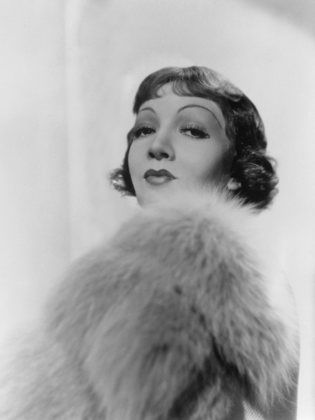
Claudette Colbert
NEW SPECIAL NO FRILLS OFFER – NO ARTWORK OR CASES, SHIPPED IN PAPER SLEEVES. 3 FILMS FOR £20.00, 5 FILMS FOR £30.00 OR 10 FILMS FOR £50.00 AND NO ADDITIONAL POSTAGE CHARGES ANYWHERE IN THE WORLD!! NEW
NEW HAVE YOUR FILMS DELIVERED BY FILE TRANSFER DIRECTLY TO YOUR HOME COMPUTER FOR JUST £5.00 PER TITLE NEW
Baby Take A Bow (1934)
Starring Shirley Temple……£7.49
Back Pay (1930)
Starring Corinne Griffith and Montagu Love, this film has a runtime of 56 mins…..£7.49
Back Room Boy (1942)
Starring Arthur Askey……£7.49
Baker's Wife, The aka La Femme du Boulanger (1936)
Directed by Marcel Pagnol and starring Raimu, this is a French film with English subtitles. It has a runtime of 127 mins and the print is of good to very good quality…..£7.49
Band Waggon (1940)
Starring Arthur Askey and Jack Hylton. A plot involving spies in a haunted castle
gives this team of celebrated British wireless comedians plenty of scope for laughs.
Evicted from the roof of Broadcasting House, Arthur Askey and Stinker Dickie Murdoch
move into Droon Castle in Sussex. Not realising that the television equipment they
discover is in use by German secret agents they do the obvious thing -
Basin Street Review (1955)
Starring Nat King Cole……£7.49
Bat, The (1959)
Starring Vincent Price……£7.49
Battle of Paris (1929) **UPGRADE – Improved print**
Directed by Robert Florey and starring Gertrude Lawrence, Charles Ruggles, Walter Petrie, Arthur Treacher and Luis Alberni, this film has a runtime of 68 mins and the print quality is very good. This is the first movie musical with songs by Cole Porter.
Plot: Georgie, a singer and music vendor on the streets of Paris, teams with Zizi, a pickpocket, and in the scurry before a police raid she meets Tony, a young American artist. Returning his wallet the next day. Georgie is persuaded to remain and model for him, and as a result they fall in love. When war is declared, Tony enlists and Georgie keeps his apartment for him. While nursing in a large hospital in Paris, Georgie becomes pals with three "musketeers" of the Paris underworld; when Tony fails to meet her on his leave, she finds him in the arms of Suzanne, a cafe waitress; with her friends she monopolizes their attention with her musical talent. Later, Suzanne lures her from the apartment and has her imprisoned. Tony joins the friends in their search for her; and after a battle with the villains, the lovers are reunited.
Review: This is a remarkable film in many ways. Made in the first full year of sound,
its sound quality is surprisingly good. It is a semi-
Battle Stations (1956)
Directed by Lewis Seiler and starring John Lund, William Bendix, Keefe Brasselle and Richard Boone, this film has a runtime of 80 mins and the print quality is excellent. A logo is visible throughout.
Plot: A rebuilt WWII carrier sails back to the Pacific theater to rejoin the war
in early 1945, a carrier the Japanese think they sank. So if she shows up again,
they will go after her with a vengeance. And they do, nearly destroying her again,
ending that mission for her, but she is able to limp back to the states. The captain
is tough, he knows the added risk for his ship, but shows he also has a heart by
not relieving a pilot of flight duty, one who committed a serious mistake by not
taking a wave-
Review: I saw this movie in the 1950s in its theatre run. It stuck with me as a tale of considerable heroism, although the years may have taken their toll on the precision of my memory. If Columbia would release it on video I'd run right out and buy it, Grade B or not. Better yet, the tale within it would lend itself well to a major studio "Saving Private Ryan" blockbuster, so how about it, Hollywood?....£7.49
Beast of the City (1932)
Starring Walter Huston and Jean Harlow……£7.49
Beat The Devil (1953)
Starring Humphrey Bogart……£7.49
Beau Ideal (1931)
Starring Loretta Young……£7.49
Beautiful aka Bellissima (1951)
Directed by Luchino Visconti and starring Anna Magnani, Walter Chiari, Tina Apicella and Gastone Renzelli, this film has a runtime of 109 mins and the print quality is very good to excellent. This is an Italian language film with English subtitles.
Plot: Film director Blasetti is looking for a little girl for his new movie. Along with other mothers, Maddelena takes her daughter to Cinecittà, hoping she'll be selected and become a star. She is ready to sacrifice anything for little Maria, even if her husband would prefer they save their little money for the rent instead of paying teachers, hairdressers, or bribes for her illusions.
Review: Anna Magnani is magnificent as a pushy show-
The film doesn't
offer any insights into the movie-
Beauty and the Beast (1946)
Directed by Jean Cocteau. French language film with English subtitles……£7.49
Because You’re Mine (1952)
Starring Mario Lanza and Doretta Morrow……£7.49
Becky Sharpe (1935)
Starring Miriam Hopkins and Nigel Bruce……£7.49
Bed And Board aka Domicile Conjugal (1970)
Directed by Francois Truffaut and starring Jean-
Plot: Some time after "Baisers Volés", Antoine Doinel (Jean-
Review: "Domicile Conjugal" is a delightful and very funny "Scenes from a Marriage"
by Truffault. His ambiguous alter-
Bedtime Story, A (1933)
Delightful comedy starring Maurice Chevalier, Edward Everett Horton and Baby Leroy……£7.49
Bees In Paradise (1944)
Starring Arthur Askey……£7.49
Behave Yourself (1951)
Starring Farley Granger……£7.49
Behind Office Doors (1931)
Starring Mary Astor and Ricardo Cortez……£7.49
Behind The Mask (1946)
Starring Kane Richmond……£7.49
Bell Bottom George (1944)
Starring George Formby……£7.49
Belle Of The Nineties (1934)
Starring Mae West……£7.49
Beloved Vagabond, The (1936)
Starring Maurice Chevalier and Margaret Lockwood……£7.49
Bete Humaine, La (1938)
This film was directed by Jean Renoir and stars Jean Gabin and Simone Simon…..£7.49
Bicycle Thieves aka Ladri di biciclette (1948)
Directed by Vittorio de Sica and starring Lamberto Maggiorani, Enzo Staiola, Lianella Carell and Elena Altieri, this film has a runtime of 89 mins and the print quality is excellent.
Plot: Antonio Ricci, an unemployed man in the depressed post-
Review: It is post-
de Sica chose non-
`The Bicycle Thief' personifies the refreshing fact that European cinema was more
daring and also true in their reaction to post-
Bidone, Il (1955)
Directed by Federico Fellini and starring Broderick Crawford……£7.49
Big Boy (1930)
Starring Al Jolson……£7.49
Big Brown Eyes (1936)
Starring Cary Grant, oan Bennett and Walter Pidgeon……£7.49
Big Chance, The (1933)
Starring Mickey Rooney……£7.49
Big House, The (1930)
Starring Robert Montgomery, Wallace Beery and Lewis Stone, this film has a runtime of 87 mins…..£7.49
Big News (1929) **UPGRADE – Improved print**
Directed by Gregory La Cava and Ssarring Carole Lombard, Robert Armstrong, Louis Payne and Wade Boteler, this film has a runtime of 66 mins and the print quality is very good.
Plot: Steve Banks is a hard-
Review: The plot elements of this movie, in my mind, take second place to the repartee,
or verbal fencing, that takes place among various characters. One character is always
needling another; each tries to top the others in snarky insults. I suppose this
is where the "comedy" label comes from.
For instance, there's the repartee among the
various reporters on Robert Armstrong's newspaper. Cupid Ainsworth (a large fat woman)
comes in, saying she's late because "I couldn't find a cab." Armstrong responds,
"You mean you couldn't find one to fit you."
Ainsworth gives as good as she gets,
however. When Armstrong comes back into the office after being bawled out by his
wife, she says, "Well, well, well! Here comes the lion with the lamb's haircut!"
(Ainsworth gives a very memorable performance in this movie, in my opinion.)
When
Armstrong goes into the editor's office to get bawled out, Ainsworth cries, "Hold
on boys, we're going around a curve!" (To me, that was better than Bette Davis' famous
line, "Fasten your seat belts, it's going to be a bumpy night!")
Tom Kennedy is in
the movie, playing a cop. (I always think of Kennedy as Gahagan, from the Torchy
Blane movies.) Armstrong refers to Kennedy as "Flatfoot," and he growls, "Lay off
the puppies!"
Armstrong and his even-
I think this movie has a quite adult sensibility as regards inter-
I always enjoy
seeing Armstrong, who is perhaps best known as the impresario who brought King Kong
back from his island. He was a quite prolific actor, and always interesting.
George
("Gabby") Hayes is also here briefly, and I'm always fascinated to see him in a movie,
beardless and in an adult, not slapstick-
In the end, the murder is pinned
on the actual perpetrator (yay!), and Armstrong and his wife are reconciled. I like
a movie with a happy ending, and to see justice is done.
This movie, to me, is enjoyable,
adult, and fun every time I see it.. ……£7.49
Big Pond, The (1930) **UPGRADE – Improved Print**
Directed by Hobart Henley and starring Maurice Chevalier, Claudette Colbert, George Barbier and Marion Ballou, this film has a runtime of 78 mins and the print quality is very good.
Plot: A tour guide in Venice romances a visiting American tourist whose father owns
a chewing-
Review: I apparently liked this one more than most people, and I thought it was a
thoroughly charming romantic comedy. I see that Preston Sturges was a writer on this
one and his touch shows. Chevalier plays Pierre, a guide of rather noble background
whose family lost their money in the first World War. Barbara (Claudette Colbert),
the rather spoiled daughter of the wealthy Billings family, falls for Pierre during
the family's European vacation. When her father first finds out that Barbara wants
to marry this man, he explodes. But then he reconsiders. He figures his best option
is to take Barbara's side, take Pierre back to America with them, put him to work
in the family business -
So this boils down to your basic fish out of water story, but Pierre is a
very sincere and charming Gallic guppy. In America he wins over everyone from his
rooming house landlady who also happens to be French to his gruff coworker (Nat Pendleton)
who was instructed to "give Pierre the business" by Mr. Billings but lightens up
after he just can't help liking the guy.
However, Pierre's blessings -
Chevalier is pretty much the whole show in this one since it really
is Pierre's story -
Big Sleep, The (1946)
Starring Humphrey Bogart and Lauren Bacall……£7.49
Big Store, The (1941)
Starring the Marx Brothers……£7.49
Big Trees (1952)
Starring Kirk Douglas. In 1900, unscrupulous timber baron Jim Fallon plans to take advantage of a new law and make millions off California redwood. Much of the land he hopes to grab has been homesteaded by a Quaker colony, who try to persuade him to spare the giant sequoias...but these are the very trees he wants most. Expert at manipulating others, Fallon finds that other sharks are at his own heels, and forms an unlikely alliance……£7.49
Bigamist, The (1953)
Starring Edmund O’Brien and Joan Fontaine……£7.49
Birmingham Black Bottom (1929)
Three short comedies (talkies) from 1929 produced by Al Christie with all black cast ……£7.49
Bishop Misbehaves, The (1935)
Starring Edmund Gwenn and Maureen O’Sullivan……£7.49
Black Dragons (1942)
Starring Bela Lugosi……£7.49
Black Magic aka Meeting At Midnight (1944)
Directed by Phil Rosen and starring Sidney Toler, Mantan Moreland, Frances Chan and Joseph Crehan, this film has a runtime of 63 mins and the print quality is excellent.
Plot: Because Charlie Chan plans to return to Honolulu, he no longer needs the services of Birmingham, who gets a job as butler for William and Justine Bonner, two apparently phony psychics who regularly host occult activities in their home. When Charlie's pretty daughter Frances attends a séance out of curiosity, Mr. Bonner is shot, and she becomes an immediate suspect. Charlie postpones his trip home to help with the investigation, which is made problematic when no bullet can be found in the wound and a hypnotized Mrs. Bonner is compelled to commit suicide by jumping off the roof of a downtown building.
Review: This installment of the Chan series is more light-
Considering
it was made in a few weeks with a minimal budget, this Chan was a fun hour of entertainment.
Charlie is Charlie -
Black Moon (1934)
Starring Fay Wray……£7.49
Black Sheep Of Whitehall, The (1942)
Starring Will Hay and John Mills……£7.49
Blackmail (1929)
Directed by Alfred Hitchcock and starring Anny Ondra, John Longden, Sara Allgood, Charles Paton, Donald Calthrop and Joan Barry, this film has a runtime of 86 mins and the print quality is excellent.
Much of the filming originally was shot silently. When sound became available during
the course of shooting, Sir Alfred Hitchcock reshot certain scenes with sound, thus
making it his first talkie. There was one complication with this change, however.
Leading lady Anny Ondra had a thick Czech accent which was inappropriate for her
character, Alice White. Joan Barry was chosen to provide a different voice for her,
but post-
Plot: Alice White, the daughter of a tobacconist, has been dating Frank Webber, a young up and coming detective at Scotland Yard. After successfully ditching Frank one evening on a date, Alice instead meets up with a young male artist who she really wanted to be with that evening. After going up to the artist's studio apartment, he tries to rape her. She ends up stabbing him to death in self defense, after which, she tries to wipe out any evidence of being in his apartment, followed by sneaking out of the apartment and wandering the streets in a shocked daze over what she did. Frank ends up being one of the detectives assigned to the case, who sees evidence known to him to Alice's in the artist's apartment, and recognizing the dead man as the person with whom Alice went off after she ditched him the night before. Frank decides to remove the evidence he knows implicates Alice from his fellow detectives, but confronts Alice with it to see what she says. But before she answers, an unsavory type named Tracy implies that he knows what happened, and blackmails the pair in return for his silence. Eventually, Frank learns that Tracy is a wanted criminal. So Frank comes up with an idea of pinning the murder on him. The question becomes whether such a move will actually work, and if so, whether Alice's conscience will allow an innocent man, however unsavory, be charged with a crime he didn't commit.
Review: Considering the technical limitations confronting Hitchcock (the part-
Blake of Scotland Yard (1937)
Starring Ralph Bird, this is a scratchy but good print of the film with a runtime of 70 mins…..£7.49
Blanche Fury (1948)
Starring Valerie Hobson and Stewart Granger……£7.49
Blind Venus (1941)
Directed by Abel Gance, this is a very good print of a French film with English subtitles and a runtime of 144 mins…..£7.49
Blithe Spirit (1945)
Starring Rex Harrison, Constance Cummings and Kay Hammond……£7.49
Block-
Starring Stan Laurel and Oliver Hardy……£7.49
Blonde Venus (1932)
Starring Marlene Dietrich, Herbert Marshall and Cary Grant, the film has a runtime of 90 mins…..£7.49
Blondie of the Follies (1932)
Directed by Edmund Goulding and starring Marion Davies, Robert Montgomery, Billie Dove, Jimmy Durante, James Gleason, Zasu Pitts, Sidney Toler and Douglass Dumbrille, this film has a runtime of 91 mins and the print quality is very good to excellent.
Plot: Blondie, a New York tenement dweller, and Lurlene are best friends. When Lurlene
makes the cast of a big Broadway show, she arranges for Blondie to join the cast
as well. But the friendship goes awry when Lurlene's sweetheart, wealthy Larry Belmont,
catches Blondie's act and falls for the fair-
Review: One of Marion Davies' best performances in this snappy comedy/drama. Davies
plays Blondie, a good girl who becomes a success in the follies despite her best
friend's effort. Billie Dove (a big silent star in her best talkie role) is excellent
as the friend. Robert Montgomery, Zasu Pitts, Sidney Toler, Douglas Dumbrille, and
Jimmy Durante co-
Blood on the Sun (1945)
Starring James Cagney. Nick Condon is a newspaper reporter working in Tokyo who refuses
to toe the Japanese line on the expansionist policies of the anti-
Blue Angel (1931)
Starring Marlene Dietrich and Emil Jannings. Immanuel Rath, old and single, is a teacher at the town's high school. When he discovers that some of his pupils often go into a joint, The Blue Angel, to visit a dancer, Lola Lola, he comes there to confound them. But he is aroused by Lola. The next night he comes again... and does not sleep at home……£7.49
Blue Light, The (1932) **UPGRADE -
Directed by Leni Riefenstahl and Béla Balázs, written by Leni Riefenstahl, Béla Balázs and Carl Mayer and starring Leni Riefenstahl, Mathias Wieman, Beni Führer and Max Hiolzboer, this film has a runtime of 79 mins and the print quality is very good to excellent. This is a German silent and this is a Russian version, dubbed in Russian with hardcoded English subtitles. This was a groundbreaking film at the time. It was a sound film shot all on location high in the mountains. Real mountain people were used as supporting players.
Plot: Junta is hated by the people in the village where she lives, especially by the women, who suspect her of being a witch. Only she can climb the nearby mountains to a cave high up, whence a mysterious blue light glows when the moon is full. Many young men of the village have died trying to follow her. She is driven out of town, and takes to living in the mountains. Eventually she shares the secret of the blue light with one man, and he betrays it.
Review: Leni Riefenstahl, soon to become notorious as Hitler's favorite director,
made her directorial debut with this vivid and beautiful film. It tells the tale
of a mysterious blue light on top of a mountain that lures young men to their deaths.
The only person who can reach it is a young outcast played by Riefenstahl herself.
She is exquisitely beautiful -
It's
all a bit Freudian and far too slow at times, but the photography is so sublime that
it doesn't matter. Black and White has seldom looked so beautiful and the use of
light is magnificent. Riefenstahl certainly knew how to film and light faces (including
her own), a talent that would later enhance her propaganda films for the Nazis. This
film is more than an historical curiosity -
Blue Steel (1934)
Starring John Wayne. Review:R.N. Bradbury (writer/director) is in his element with
the artifice and comedy of the opening scene, and he gives plenty of scope to George
Hayes as the sheriff especially in a fine comical performance with a good deal of
nuance. The story is an incomparable cloak-
Blue Veil, The (1951)
Directed by Curtis Bernhardt and Busby Berkeley (apparently, although uncredited) and starring Jane Wyman, Charles Laughton, Joan Blondell, Richard Carlson, Natalie Wood and Agnes Moorhead, this film has a runtime of 114 mins. The print quality is ok to good and is what looks like a transfer from videotape, but as far as I can tell the film hasn’t had a dvd release.
Review: Remember Channel 9 in New York City? So many times they would show the classic
THE BLUE VEIL with Jane Wyman, Richard Carlson, Charles Laughton, Vivian Vance, Natalie
Wood and Joan Blondell. It was part of what was known as THE MILLION DOLLAR MOVIE.
Go know that this magnificent film would disappear. Jane Wyman is now past 90 years
of age. It would be a tribute to her to show this outrageously good movie.
While Wyman
was nominated for best actress in it in 1951, she lost to Vivien Leigh in A STREETCAR
NAMED DESIRE. Few people know that Wyman won the Golden Globe Award for best actress
of the year for this remarkable film.
The film pulls out every emotional stop imaginable
in depicting the life of a woman who cares for other people's children. The film
begins with a newly widowed World War 1 Wyman losing her child after giving birth.
From that point on, the viewer is taken on an emotional roller-
In tribute to the long career of Jane Wyman,
this film should be released while she is still living. We should demand this.
After
all these years, I was able to obtain a copy and I saw this wonderful film the other
day. The picture is even better after all these years. Wyman is better than terrific
here. She always played the part of the victim in her pictures. Those sad-
Wyman sacrifices her life to care for other
people's children. How many women would do that in today's society? The opportunity
was there to marry for convenience. Please note the fabulous performance of Charles
Laughton in a supporting role, as a lonely widower left with an infant. He is totally
out of his usual domineering character here. His performance is marvelous and well
understated. Natalie Wood is just fine as Stephanie. She will also tug at your heart
when she refers to Lulu (Wyman) as her mother when her own mother, played by nominated
supporting actress Joan Blondell fails to arrive at her communion….£7.49
Bohemian Girl, The
Stan Laurel and Oliver Hardy……£7.49
Bolero (1934) **UPGRADE – MUCH IMPROVED PRINT**
Directed by Wesley Ruggles and Mitchell Leisen, this film stars George Raft, Carole Lombard, Sally Rand, Frances Drake and Ray Milland. The runtime is 84 mins and the print quality is very good to excellent.
Review: George Raft's character, Raoul, is embarrassed at a talent show as the film
opens and he does his very fast Charleston -
He vows
to succeed at dancing, and finds a good female dancing partner, but she is demanding
that she be his romantic partner as well. Hungry to continue the fame and cash, Raoul
pretends that he likes her that way. One night when she quits in a jealous rage,
in walks Helen Hathaway (Carole Lombard) and offers to be his dance partner. Raoul
accepts on the condition that she pass an audition, and promptly shows the clingy
partner the door.
One of the oddest scenes to somebody who doesn't know about the
precode era is the scene where Helen auditions. She strips down to her underwear
in Raoul's hotel room so she can freely move as Raft says that she could be naked
for all he cared, this is strictly business. Six months later this would not have
been allowed, but from about 1930-
Helen
and Raoul do become a famous dance team, all the time talking a little too much about
how they do not care for each other romantically, that they are strictly business.
Things look like they might be turning romantic for awhile. Then, while in France,
the native Belgian Raoul, noticing all of the soldiers in the audience, stops mid
performance to tell the audience he will be enlisting in the army tomorrow. Helen
is impressed with his patriotism, only to find out it is all a stunt -
Points of interest
include Ray Milland with one of the silliest looking fake mustaches of all time as
a wealthy suitor of Helen's, Carole Lombard early in her career when she was playing
the tall elegant type, not the screwball comedienne, fan dancer Sally Rand doing
an actual fan dance number, and of course George Raft being given an entire film
in which to display his tremendously graceful dancing talents. Finally, there is
William Frawley, later of I Love Lucy fame, as Raoul's brother and irascible agent.
I'd
recommend it, if only to see Raft dance. Some movies that were actually about Raft
as a dancer such as "Stolen Harmony" seemed to go to great trouble to NOT show Raft
dancing. Why I'll never know....£7.49
Boom In the Moon (1946)
Starring Buster Keaton. In the final days of WWII, an earnest but somewhat dense sailor (played by Buster Keaton) is lost at sea. Months later, he makes a landing, but, not realizing that the war is over and thinking that he is in Japan, he surrenders to Mexican police, who mistake him for a serial killer. Thrown in a jail cell with an American thug, he is to be hanged next morning, when suddenly a rocket scientist offers him and his cellmate a chance to avoid execution if they pilot an experimental atomic rocket to the Moon. The unlucky duo (plus the scientist's beautiful niece who ends up in the rocket by accident) go into space, but a mishap makes them land back in Mexico within miles of their point of departure. Thinking that they are on the Moon, the trio attempt to communicate with the natives who, of course, think them crazy, until the situation resolves itself……£7.49
Boots Boots (1934)
Starring George and Beryl Formby……£7.49
Boston Blackie’s Chinese Venture (1949)
Starring Chester Morris……£7.49
Boucher, Le (1970)
Directed by Claude Chabrol and starring Stephane Audran, Jean Yanne, Antonio Passalia and Pascal Ferrone, this film has a runtime of 89 mins and the print quality is very good to excellent.
Plot: An unlikely friendship between a dour, working class butcher and a repressed
schoolteacher coincides with a grisly series of Ripper-
Review: is The Butcher a thriller? Yes. Is it a psychological drama? Yes. Is it an
idyllic small town romance? Yes. Is it a horror film? Yes. Can all of these descriptions
coexist? Yes. The Butcher is indeed all of those things. It's a film that deals with
the greatest, most puzzling, and most disturbing mysteries of humanity, but it's
also a small, simple film with a style so subtle it sometimes appears to be no style
at all. Chabrol's French contemporaries are known for their flair-
Bowery Blitzkrieg (1941)
Starring The East Side Kids……£7.49
Boy! What A Girl! (1947)
Starring Tim Moore and Elwood Smith……£7.49
Brave Sunder, Der (1931) aka The Upright Sinner
Directed by Fritz Kortner and starring Max Pallenberg, Heinz Ruhmann, Dolly Haas and Josefine Dora, this film has a runtime of 87 mins and the print quality is very good. This is a German language film with English subtitles.
Plot: A small town bank official, entrusted with taking money to Vienna, spends some of it.On his return to admit his guilt he learns that his boss,the director, has run off with even more.
Review: This is a funny and very clever comedy. Outstanding is Max Pallenberg, pater
familias, officious head cashier, and a very confused individual whose language,
facial expressions, general state of excitement carry on non-
Bride of the Monster (1955)
Directed by Edward D.Wood and starring Bela Lugosi……£7.49
Brief Moment (1933)
Starring Carole Lombard and Gene Raymond, this film has a runtime of 69 mins and the print quality is very good.
Review: Typical quick time 'soap opera' churned out by all the studios to fulfill
their theater chain commitments. This COLUMBIA PICTURES effort clocks in at 71 minutes
and entertains for most of them. Not a classic but well worth watching.
The story
is a typical one of the period, working girl played by Carole Lombard (ABBY FANE)
falls in love and marries upper crust scion. Being in 'show business' she does not
meet with approval of her in-
ABBY keeps trying to get RODNEY to stand on his own feet and
become the man she believes he is. SIG at his parasitical best tries to hold on to
a good thing, which means plenty of Booze, Night Clubs and 'Fast Times'! ABBY seeks
help from RODNEYs' family to get him on the straight path, but no luck. Usual misunderstandings,
separation and then RODNEY has a epiphany realizing ABBY was right all along. Redeems
himself and true love triumphs.
Carole Lombard portrays her role with intelligence
and sensitivity. Hard to believe this attractive and lithe actress the previous decade
was a chubby comedian at MACK SENNETT. Gene Raymond a amiable though limited actor
fulfills what is required of him. Monroe Owsley has his parasite gig down to a 'T',
making a career of such roles. Though his character of 'SIG' is always in the company
of women you get the feeling he swims both ways and his friendship with RODNEY may
be more then platonic…..£7.49
Bringing Up Baby (1938)
Starring Cary Grant and Katharine Hepburn……£7.49
British Intelligence (1940)
Starring Boris Karloff……£7.49
Broadway (1929)
Directed by Pal Fejos and starring Evelyn Brent, Glenn Tryon, Merna Kennedy and Thomas E.Jackson, this is the long thought lost sound version of the film with the Technicolor finale intact. It has a runtime of 104 mins and the print quality is excellent.
Review: This musical was directed by Paul Fejos at Universal Studios in 1929. There
were so many musical films made in 1929 with the title "Broadway" in them, thus you
might ask -
The film is like "Faust" meets
"Lights of New York" in that the film opens with a metallic-
The film was shot both silent and in sound, and has never
been on VHS or DVD. The silent version I saw had Technicolor, and the sound version
I saw was in black and white. I don't think that a talking version with color still
exists. Some people have attempted to dub the speech of the talkie version into the
silent version to get the maximum effect of the music and the color, but what I've
seen hasn't worked too well. The film's director, Paul Fejos, decided to leave the
film industry shortly after "Broadway" was complete due to his dislike of the people
running Universal. Instead he embarked on a career in anthropology, where he became
a leader in his field. An unusual end to the film career of a man who made very unusual
films….£7.49
Broadway Babies aka Broadway Daddies (1929)
Directed by Mervyn LeRoy and starring Alice White, Marion Bryon, Sally Eilers and Charles Delaney, this film has a runtime of 86 mins and the print quality is very good to excellent.
Plot: Dee lives with her two girlfriends in a boarding house. Billy is in love with Dee and runs the show where Dee is in the chorus. He has Dee stepping from the chorus to featured dancer. Gessant is a importer and gambler from Detroit. A gang is trying to keep him in town to fleece him and they use Dee as bait. He is introduced to Dee after her show and she and her friends go out with Gessant and his gambling buddies only because Dee is mad at Billy. Gessant helps her get another job as headliner at the New Moon Club. Billy and Dee break up over this job and Gessant falls for Dee. But Billy still loves Dee and Gessant loves Dee and Dee must choose who she wants.
Review: Spanking new Broadway star Alice White loves stage manager Charles Delaney,
but she thinks he's sweet on Sally Eilers, so she marries bootlegger Fred Kohler.
It
may have originally been shot as a silent, but it looks like an early talkie all
the way through, especially with the dance numbers performed on a big stage with
the proscenium arch in plain view, looking like all the early First National talkies.
In fact, that's in no small part it's problem. While Miss White's sexuality is on
plain display, and no one did it better, her voice was weak and her dancing was not
top notch. Much as people enjoy her, her stardom was one of those sports thrown up
in the early stages of a new art form. One hit was looked on as a trend, and they
worked it to death within a couple of years, along with the early movie musical.
It would take some real innovation, again by Mervyn Leroy, to help revive the musical
in 1933.
Still, within the context of 1929 musicals, this is as good as they get.
Everyone gives their work as much oomph as can be hoped for. The poor sound on the
copy I looked at was a bit of a surprise, given the superior recording ability of
Vitaphone in this period. Clearly a cleaner print, and a better soundtrack would
help….£7.49
Broadway Bill (1934)
Directed by Frank Capra and starring Warner Baxter and Myrna Loy……£7.49
Broadway Limited (1941)
Starring Victor McLaglen……£7.49
Broadway Melody (1929)
Early talkie starring Anita Page and Bessie Love……£7.49
Broadway Melody of 1936 (1935)
Starring Jack Benny, Eleanor Powell, Robert Taylor and Una Merkel, this film has a runtime of 101 mins and the print quality is very good.
Plot: Bob Gordon is staging a new Broadway Show, but he is short of money. He gets an offer of money by the young widow Lilian, if she can dance in his new show. Bert Keeler, a paper man, gets this information and is writing about this in his column in an slight unfriendly way. Gordon's old class mate Irene Forster, a tap dancer from Albany also tries to get the leading role in this show, but Lilian insists in getting this part herself. So Irene Forster, Bert Keeler and Gordon's secretary Kitty start a little game to get Irene the leading role.
Review: The songs in this film are classics. "Dream of You", "Lucky Star" are just
two of the best every written. The choreography is what you learn to expect from
the likes of Eleanor Powell, Buddy Ebsen and Nick Lang. And you get a rare chance
to glimpse the talents of Vilma Ebsen, Buddy's sister. (One of the few negatives
of the film is Vilma's lack of acting ability. But this is a very small distraction.)
Robert
Taylor is his silky smooth self. Normally easy to dislike in other films, his character
(the producer) comes off as likable and honest.
If you are an Una Merkel fan, as I
am, she would be reason enough to spend the time watching this picture. She is her
adorable self, as Taylor's secretary.
Powell shows up as an ex girl friend from Albany,
with stars in her eyes, looking for a break in show business, only to be turned away
by Taylor, who honestly believes Broadway is no place for this innocent. Eleanor
has a tough time emoting with the veteran actors here, and her shallow acting talent
can be a little grating at times. But her dancing and off beat beauty far over ride
any real distractions.
Jack Benny has a chance to display an edgier side; one which
we are not used to seeing from him, and it both surprising and gratifying to see
how well he carried it off.
This is one of those films you can dust off and watch
any time you're feeling the need for a shot of simpler, easier times…..£7.49
Broken Jug, The aka Der Zerbrochene Krug (1937)
Directed by Gustav Ucicky and Emil Jannings and also starring Emil Jannings, this German language film has English subtitles and has a runtime of 81 mins. The print quality is good.
Review: Kleists "Zerbrochener Krug" demonstrates that even "classical poets" have
written plays that are devilishly funny and remain a joy to watch over hundreds of
years. When we had to read it as students in a German high school, it was an exhilarating
surprise among the usual fare. We even acted it out in class, with much giggling,
even though we certainly did not reach Emil Janning's finesse of the movie, which
was made well before our school years. His portrayal of the village judge Adam, ever
so sly but not a bad guy, trying to extricate himself from the closing web of personal
mishaps, and under the eye of a stern inspector to boot, gives the play its full
due. The other actors are all very good too, with the one unfortunate exception of
Lina Carstens -
Buck Privates (1941)
Starring Bud Abbott and Lou Costello……£7.49
Buck Rogers (1939)
Complete serial starring Buster Crabbe……£7.49
Bulldog Breed, The (1960)
Starring Norman Wisdom……£7.49
Bulldog Drummond Comes Back (1937)
Starring John Barrymore and John Howard. The girlfriend of Captain Drummond is being kidnapped by an enemy of Drummond who seeks revenge. But Drummond and his friend Colonel Nielsen at once follow his trail……£7.49
Bulldog Drummond Escapes (1937)
Starring Ray Milland. Captain Drummond becomes a prisoner when he intends to protect a beautiful heiress from an espionage organization……£7.49
Bulldog Drummond's Bride (1939)
Starring John Howard and Reginald Denny. A bank-
Bulldog Jack (1935)
Starring Jack Hulbert, Fay Wray and Ralph Richardson. Review: Bulldog's car is sabotaged and he crashes into another car on his way to a mysterious mission. As it turns out, the driver of the other car is a great fan of Bulldog's work and his lifestyle. So, while Bulldog is mending in the hospital, the fan agrees to take on Bulldog's work for him. Thus begins an exercise in comedic silliness that only the Brits can do. It's not hysterically funny. It just has that sort of laid back, gentle, situation type humor that the Brits do better than anyone else. There is also enough tension and mystery to make all the running about worth while. I gave it the nine it deserved……£7.49
Bullfighters, The (1945)
Directed by Malcolm St.Clair and Stan Laurel and starring Stan Laurel, Oliver Hardy, Margo Woode, Richard Lane, Carol Andrews and Diosa Costello, this film has a runtime of 58 mins and the print quality is excellent.
Plot: The boys are detectives working in Mexico. Laurel happens to resemble a famous matador who has disappeared, and he is enlisted to replace him in the bullring.
Review: Of course, this Laurel & Hardy feature is not another "Way Out West" (1937),
but it's still worth watching. Their final Hollywood picture is far better than the
other Fox and MGM products that the Boys did in the forties. Despite some boring
sequences there is much more room for comedy -
By Appointment Only (1933)
Starring Lew Cody and Sally O’Neill……£7.49
Ready to buy? Email your choices to silentfilmdvd@gmail.com and we will send you a paypal invoice. We also accept payment by cheque within the UK.
Prices including p&p are as follows:
Within UK
1 disk £7.49
3 disks £20.00
5 disks £30.00
10 disks £50.00
10 + disks £5.00 per disk
Outside UK
1 disk £8.99
3 disks £20.00
5 disks £30.00
10 disks £50.00
10+ disks £5.00 per disk
File transfer
£5.00 per title
If you want more information on any of the titles then please email us, we'll be happy to help.
Please remember if you need a film to be NTSC to make this clear when ordering
Email: silentfilmdvd@gmail.com