Sound Films C
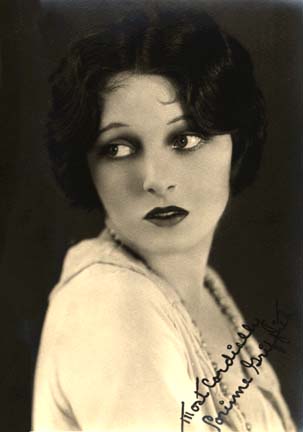
Corinne Griffith
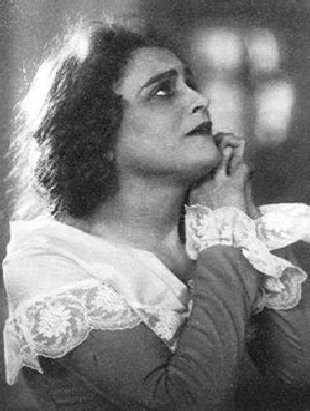
Marija Leiko
NEW SPECIAL NO FRILLS OFFER – NO ARTWORK OR CASES, SHIPPED IN PAPER SLEEVES. 3 FILMS FOR £20.00, 5 FILMS FOR £30.00 OR 10 FILMS FOR £50.00 AND NO ADDITIONAL POSTAGE CHARGES ANYWHERE IN THE WORLD!! NEW
NEW HAVE YOUR FILMS DELIVERED BY FILE TRANSFER DIRECTLY TO YOUR HOME COMPUTER FOR JUST £5.00 PER TITLE NEW
Cabin In The Sky(1943)
Directed by Vincente Minnelli and Busby Berkeley, this film stars Ethel Waters, Eddie ‘Rochester’ Anderson, Lena Horne, Louis Armstrong and Rex Ingram. It has a runtime of 95 mins and the print quality is excellent.
Storyline: Chronic gambler and carouser "Little" Joe Jackson is shot by Domino Johnson
at Jim Henry's gambling club over an outstanding gambling debt. Little Joe's wife,
the God-
Review: I would like to take the time to express what an OUTSTANDING MOVIE "Cabin
in The Sky" is. As an African-
That whole theory as
it pertains (Biblically), to Men & Women "grappling" with their conscience to do
the "Right Thing", dealing with the "forces" of "good vs. evil", really comes to
light here.
You actually see "Lucifer Jr." arguing with the "General" of God's Army
about the "rules" & regulations on how to get "Little Joe" (Eddie "Rochester" Anderson),
to commit sin & do the wrong things.
I've been raised in the African-
I'm also amazed at the "ethnic insight"
of the Director Vincente Minnelli. He picked the "RIGHT" Black Actors to portray
the various characters that had the ability to get the point(s) across effectively.
Considering
this Movie/Musical was being shown to an audience in 1943 America, (WHICH WAS STILL
VERY RACIST), Director Minelli seemed to make the "connection" without any problem
at all.
Of course, the cast was an All Star, All Black cast which was good for the
Actors/Actresses because it gave them much needed work. I could relate to the part
of "Petunia" played by Ethel Waters. She reminded me of a really nice Woman who currently
attends my Church.
Eddie "Rochester" Anderson, Rex Ingram, Lena Horne, Louis Armstrong,
& a host of others, came together to make this Movie one of the "Great Ones" in my
opinion. These Actors/Actresses are all gone now, but their talent will remain in
the hearts & minds of many fans as well as movie history which I'm sure will be kind
to them.
"Cabin in The Sky!!" A great Movie that I would highly recommend for the
entire Family….£7.49
Calaveras, Los ( 1931)
Starring Stan Laurel and Oliver Hardy……£7.49
Calendar Girl (1947)
Starring Janet Frazee and William Marshall……£7.49
California (1946)
Starring Barbara Stanwyck and Ray Milland……£7.49
Call Her Savage (1932)
Starring Clara Bow. Sexy Texas gal storms her way through life, brawling and boozing
until her luck runs out and she learns the errors of her ways. In the end, she discovers
that her father was a local Indian, which explains her wild ways! Review: What a
film! Daring to tackle issues few films would even look at today. Stunningly photographed
and directed, and with greater style than many early talkies. And at its heart is
one of the best film performances ever -
Call It Murder (1934)
aka: Midnight. Starring Humphrey Bogart in an early role. Jury foreman Edward Weldon's questioning leads to the death sentence for Ethel Saxon. His daughter Stella claims to have killed her lover, the gangster Garboni, just as Saxon was to sit in the electric chair. £7.49
Call of the Flesh (1930) ** UPGRADE -
Directed by Charles Brabin and starring Ramon Novarro, Dorothy Jordan, Ernest Torrence, Renée Adorée, Nance O’Neil and Mathilde Comont, this film has a runtime of 100 mins and the print quality is excellent.
Renée Adorée was cast at the insistence of her friend and frequent costar Ramon Novarro,
who probably didn't know how ill she was with tuberculosis. She suffered two hemorrhages
during production which almost shut the project down. After one setback, Novarro
tried to convince production supervisor Hunt Stromberg to relieve her of her duties
and re-
Plot: Juan de Dios, from a poor working-
Review: Ramon Novarro is really great in this fairly ordinary film about a young
singer and his love for an innocent girl. The plot calls on him to sing a lot -
It's easy to see why this sweet film was so popular
in its day, and why it was re-
Ramon's
regular leading lady, Dorothy Jordan, is pretty good here, Ernest Torrence hams a
bit as Ramon's dad, and Renee Adoree is wonderful in her last screen performance
(she died very young of TB) -
Charles Brabin's direction and the screenplay
are uninspired, but the film is worth seeing for Ramon Novarro's extraordinary performance….£7.49
Camels Are Coming, The (1934)
Terrific comedy starring Jack Hulbert……£7.49
Canary Murder Case (1929)
Starring William Powell & Louise Brooks in this early talkie. Trivia: Brooks' refusal to dub the movie angered her parent studio, Paramount, and effectively sabotaged her acting career. A beautiful showgirl, name "the Canary" is a scheming nightclub singer. Blackmailing is her game and with that she ends up dead. But who killed "the Canary". All the suspects knew and were used by her and everyone had a motive to see her dead. The only witness to the crime has also been 'rubbed out'. Only one man, the keen, fascinating, debonair detective Philo Vance, would be able to figure out who is the killer...£7.49
Candles At Nine (1944)
Starring Jessie Matthews……£7.49
Can’t Help Singing (1944)
Directed by Frank Ryan and starring Deanna Durbin, Robert Paige, Akim Tamiroff and David Bruce, this film has a runtime of 90 mins and the print quality is excellent. This was the first time that Deanna Durbin appeared in a Technicolor production.
Plot: With the California Gold Rush beginning, Senator Frost's singing daughter Caroline loves a young army officer; the Senator can't stand him, and has him sent to California. Headstrong Caroline follows him by train, riverboat, and covered wagon, gaining companions en route: a vagrant Russian prince and gambler Johnny Lawlor, who just might take her mind off the army.
Review: In perhaps her only color appearance on film, Deanna Durbin is at her prettiest,
spunkiest, wittiest and romantic best. Long before Doris Day sang about her secret
love to the clouds and daffodils and Jane Powell sang in a glorious meadow about
a wonderful, wonderful day, Durbin sang a love song overlooking the grand canyon.
She's in love with army officer Robert Paige over the objections of her senator father
(Ray Collins) and runs away to follow him to California. But missing her stagecoach,
she ends up on a wagon train, involved with Indians, two phony European noblemen
(really petty thieves) and a handsome cowboy, pretty much winning the affections
of her traveling companions, winning over the audience as well.
Some lovely Jerome
Kern songs aide Durbin in her scintillating performance, surrounded by a great supporting
cast. The former Aunt Polly and Auntie Em (Clara Blandick) gets some great lines
in her small role as Durbin's understanding aunt. Akom Tamiroff, Leonid Kinskey and
David Bruce are also memorable in supporting parts. A subplot involving a supposed
arranged marriage between chunky Thomas Gomez provides an amusing misunderstanding
between Durbin and Paige. The beautiful photography, witty script and Durbin's charm
makes this one a complete winner. The final reprise of the title song makes this
absolutely magical. ……£7.49
Carnet de Bal, Un aka Christine (1937)
Directed by Julien Duvivier and starring Harry Baur, Raimu, Marie Bell, Pierre Blanchar, Fernandel, and Francoise Rosay, this French language film has English subtitles and has a runtime of 124 mins. The print quality is very good.
Plot: After the death of her husband, Christine realizes she has possibly wasted her life by marrying him instead of the man towards whom, in her youth, she had a stronger inclination. To overcome these dreary thoughts, she decides to find out about him and the other men who danced with her during a ball that was a turning point in her life, many years ago. She pays a visit to those forgotten acquaintances one after the other; Christine is not only surprised to see how they have fared, but also discovers the impact she had, unknowingly, on the feelings and the destiny of these persons.
Review: This is one of the quintessential films of the classic age of French cinema.
One just has to look at the credits: directed by Duvivier, with Fernandel, Baur,
Jouvet (one of his best roles), Marie Bell, Francoise Rosay... all of them at the
peak of their form. And held together musically by Jaubert's haunting theme melody,
which I can still hum in the nostalgia cupboard of my memory fifty years after I
first heard it.
The story is slight. Actually it is a series of vignettes, strung
together by the bittersweet pilgrimage of a woman who sets out to find again the
men who signed her first dance card. But that is just a pretext for a marvelous set
of character sketches played by a marvelous cast of character actors served by a
great character director….£7.49
Carnival In Flanders aka La Kermesse Heroique (1935)
Directed by Jacques Feyder and starring Françoise Rosay, André Alerme and Jean Murat, this film has a runtime of 109 mins and the print quality is excellent.
Storyline: When the village of Boom, in Flanders, learns a Spanish Duke and his troops
plan to pass the night, the 4-
Review: The mayor of a small town in Flanders is thrown into panic when he hears
that the Spanish are coming to occupy the town. he decides to pretend to be dead,
leaving his wife and the other ladies of the town to cope with the Spanish invasion.
The mayoress rallies the ladies, and reassures them that they will be more than a
march for the Spaniards.
This is an enchanting period comedy, full of lovely details
of everyday life, and with many hilarious moments as the ladies of Flanders meet
the gentlemen of Spain. the charming flirtation that develops between the mayoress
and the leader of the Spanish troops is particularly well done. and there's a delightful
scene where one of the gentlemen of Flanders and one of the Spaniards find they have
a mutual enthusiasm for needlework. An unusual and very amusing film, pure enjoyment
from beginning to end….£7.49
Carnival of Lost Souls (1962)
The cult classic, made on a shoestring budget……£7.49
Carve Her Name With Pride (1958)
Directed by Lewis Gilbert and starring Virginia McKenna, Paul Scofield, Jack Warner and Denise Grey, this film has a runtime of 114 mins and the print quality is excellent.
Plot: Violette Bushell is the daughter of an English father and a French mother, living in London in the early years of World War II. She meets a handsome young French soldier in the park and takes him back for the family Bastille day celebrations. They fall in love, marry, and have a baby girl when Violette Szabo receives the dreaded telegram informing her of his death in North Africa. Shortly afterwards, Violette is approached to join the S.O.E. (Special Operations Executive). Should she stay and look after her baby or "do her duty"?
Review: Virginia McKenna has long been an idol of mine, and this film is one of the primary reasons. I think she is one of the overlooked great actresses of the '50's and 60's. At any rate, this is an extraordinary film in so many ways. I love good biographical pictures in general, but this is one of the most poignant and accurate ever done. The remarkable story of Violette Szabo should be seen by all. Paul Scofield is brilliant as well. This merits a perfect score. Don't miss it!...£7.49
Casa Del Angel (1957) aka House of the Angel
Directed by Leopoldo Torre Nilsson and starring Elsa Daniel, Lautaro Murua, Berta Ortegosa, Barbara Mujica, Yordana Fain and Alejandro Rey, this film has a runtime of of 72 mins and the print quality is very good. This is an Argentine film in Spanish language with English subtitles.
Plot: The House of the Angel focuses on the ruling class in 1920s Argentina, a deeply repressive society where political arguments were often settled by duels, and young women were expected to be totally ignorant of sex.
Review: This movie reflects a major change in Argentine filmmaking and the maturity of a young director. The decadence of the aristocracy is showed subtlety in a claustrophobic atmosphere. The innocence confronted with the sexuality of a young woman. A superb art direction. A masterpiece on filmmaking….£7.49
Cash (1933)
Starring Robert Donat and Edmund Gwenn……£7.49
Casque D’Or (1952)
Directed by Jacques Becker and starring Simone Signoret and Serge Reggiani, this film has a runtime of 94 mins and the print quality is very good to excellent. It is a French language film with English subtitles.
Plot: In an open-
Review: Despite the corsets and petticoats and horse-
Like Zola's Nana, Marie is neither a villain nor
a victim, simply an elemental force of nature. This elemental-
In an
otherwise favourable review, Pauline Kael said that the film's tone was slightly
trashy, as if it were saying, of the low-
Cat’s Paw, The (1934)
Starring Harold Lloyd and Una Merkel……£7.49
Cercle Rouge, Le (1970)
Directed by Jean-
Plot: On the eve of his release after five years imprisoned, the thief Corey is contacted
by one guard of the prison that offers him a jewelry heist. However Corey seeks out
his former boss Rico and steals money from him. Rico sends two gangsters to hunt
Corey down and retrieve the stolen amount. Meanwhile the criminal Vogel is transported
by train by the Police Officer Mattei and succeeds to escape. Corey drives from Marseille
to Paris and Vogel hides in the trunk of his car. Corey finds him but does not object
to ride Vogel to Paris hidden in the trunk. When the gangsters sent by Rico cut in
Corey's car, Vogel saves him from the criminals, but Corey loses the money. Without
money, Corey decides to heist the jewelry with Vogel and invites the former police
detective Jansen to team-
Review: Jean-
Yet
look at each of the four main players: Alain Deleon as Corey (just released from
prison, scheming a new heist), Gian Maria Volonte as Vogel (escaping & on the lam
from hand-
As absorbing and cool the story becomes,
and as great the skills were to make it happen (via cinematographer Henri Decae,
the editing, and the musical score by Eric Demarsan), it's the people on the screen
that gain fascination, in how they stay true to their natures and ideals. Not a film
to be missed by French new-
Cesar (1936)
Directed by Marcel Pagnol and starring Raimu……£7.49
Charley’s Big Hearted Aunt (1940)
Starring Arthur Askey and Phyllis Calvert……£7.49
Charlie Chan and the Secret Service (1944)
Directed by Phil Rosen and starring Sidney Toler and Mantan Moreland, this film has a runtime of 62 mins and the print quality is very good to excellent.
Plot: A scientist working on an important new invention which will protect Allied
shipping from U-
Charlie Chan in the Chinese Cat (1944)
Directed by Phil Rosen and starring Sidney Toler and Joan Woodbury, this film has a runtime of 62 mins and the print quality is very good.
Plot: Thomas P. Manning, businessman and chess expert mysteriously shot in a locked room, dies clutching some chess pieces. Police are baffled, and finally abandon the case. Six months later, victim's daughter Leah Manning, stung by a scurrilous book about the case, enlists the aid of Charlie Chan and Number 3 Son. Additional murders follow, leading to a climactic confrontation in a seemingly deserted "Fun House.
Review: Chan fans and film buffs will enjoy this better-
Charming Sinners, aka The Constant Wife (1929) **UPGRADE – Much improved print**
Directed by Robert Milton and based on the play by W.Somerset Maugham, this film stars Ruth Chatterton, Clive Brook, Mary Nolan, William Powell, Laura Hope Crews, Montagu Love and Claud Allister. It has a runtime of 65 mins and the print quality is very good to excellent.
Review: Charming Sinners is the second dialogue film based on the work of England's
Somerset Maugham. The film was something new for the cinema. It was not about action.
It was about words—expertly delivered by a well-
Chatterton, as the wife of an errant
husband (Clive Brook, appropriately stiff and full of himself), opts for the single
standard with the sole purpose of getting him back. Enter the polished William Powell,
a former beau who is still in love with her. Together, they have much more chemistry.
There is an exquisite musical interlude at the piano. While Chatterton plays and
sings a wistful melody, Powell pours his heart out. She dismisses his ardor with
an appreciative laugh. The question is: will Ruth take a vacation from marriage and
rendezvous with Powell in Italy? Although the film ends differently from the stage
production, it is an effective, thoughtful finish for an engaging frolic amongst
the upper-
Filmed in early 1929, critics were impressed by the film and its
players, but complained about the sound quality. It was shot in the wee hours of
the morning (typical of early sound features), and it's a marvel that the players
pulled off such an amusing piece of work. Robert Milton and Dorothy Arzner co-
Chasing Rainbows (1930)
Directed by Charles Reisner and starring Bessie Love, Charles King, Jack Benny, George K.Arthur, Polly Moran and Marie Dressler, this film has a runtime of 88 mins and the print quality is very good to excellent.
Plot: The road-
A troupe of musical comedy performers travel about the country, forever CHASING RAINBOWS
of success & happiness.
Review: This early MGM musical, considering its age and the
obvious limitations brought on by the new sound technology, does a fair job in entertaining
its audience. Although the film features a song that would become a classic ('Happy
Days Are Here Again' by Milton Ager & Jack Yellen) it is on the strength of a couple
of its performances that its modest success is based.
Pert & pretty Bessie Love is
wonderful as a sweet young singer who adores her leading man. She is completely natural
with the microphone and exhibits a tender talent which was never allowed to grow
to its full potential in talking films. While good throughout, the scene in which
she dissolves into hysterical laughter upon hearing some emotionally devastating
news is absolutely frightening in its power.
As her love interest, Charles King doesn't
fare nearly so well. This is largely due to the fact that his romantic trials & tribulations
-
Playing
the stage manager, Jack Benny is the emotional calm point around which the activity
swirls. He has very little to do besides move the plot along. His brotherly interest
in Miss Love seems platonic and Jack is left out of the film's romantic action.
While
not given top billing, Canadian Marie Dressler steals the film as an aging comedienne
with too much past. Using her large, homely face & shapeless body to great advantage,
she grabs the viewers' attention and never lets go. At this point in her career Dressler
was right on the cusp of gaining enormous personal success and within a year she
would become Hollywood's biggest star. Even in such a relatively routine role, such
as she fills here, Dressler reveals the tremendous heart & common touch which would
be the secret to her celebrity. (For an extra chuckle, pay close attention during
the opening long shot where the cast sings the last few bars of 'Happy Days' -
Appearing as a drunken wardrobe lady, the ubiquitous Polly Moran
makes another appearance as Dressler's sidekick. Short, spunky & buxom, Polly was
always fun to watch -
In a small role,
George K. Arthur plays Benny's gynandrous assistant; an important silent comedy star
for MGM, this Scottish-
It should
be noted that the film's original Technicolor sequences -
Chess Player, The aka Le joueur d'échecs (1938)
Directed by Jean Dréville and starring Conrad Veidt, Françoise Rosay, Bernard Lancret and Micheline Francey, this film has a runtime of 81 mins and the print quality is excellent. This French language film has hardcoded English subtitles.
Plot: A toymaker in Poland specializes in building lifesize mechanical men. He builds
a chess-
Review: An ageing aristocrat is widely known for his clever automatons. Thanks to
his genius and his richly-
The game of chess can be used as a metaphor
for various pursuits : a battle of wits between friends, for instance, or an amorous
conquest. Here it is used -
It is hard to describe the movie -
A number of factors
contribute to its success. First, there is an exceptionally clever intrigue. Secondly,
there is some riveting acting going on, with Françoise Rosay (as Catherine) and Jacques
Grétillat (as Potemkine) stealing the show. They give the viewer two intriguing creations
: an highly intelligent ruler so sly and calculating that she could eat ten Italian
Renaissance princes for breakfast, plus a simple, hearty, bluff soldier of the kind
that knows every Central and Eastern European exchange rate by heart. Their unholy
relationship is a joy, as is the deeply cynical dialogue which accompanies it. (He
: "If you flirt with that young popinjay, it's all over between us !" She : "See
you tomorrow morning.")
So where was I ? Oh yes, it should also be noted that the
movie must have cost the Earth. Every franc of the budget is out there on the screen
and the result is jaw-
By now you will have guessed
that the movie, for all its wit and imagination, contains a significant part of darkness.
What makes it even more poignant -
Chienne, La (1931)
Directed by Jean Renoir and starring Michel Simon, Janie Marèse and Georges Flamant, this film has a runtime of 96 mins and the print quality is excellent. This is a French language film with English subtitles.
Plot: Cashier Maurice Legrand is married to Adele, a terror. By chance, he meets Lucienne, "Lulu", and makes her his mistress. He thinks he finally met love, but Lulu is nothing but a streetwalker, in love with Dede, her pimp. She only accepts Legrand to satisfy Dede's needs of money.
Review: With "la chienne",French cinema enters the pathway to genius.During the thirties,it
will be one of the best in the world.In those ancient times,it used to walk from
strength to strength,encompassing the most phenomenal innovations the seventh art
had ever known.Opening and closing his film with a puppet theater,Renoir predates
Mankiewicz's "Sleuth" prologue(1972) and countless others by decades.Punch and Judy,what
a derision!
Renoir has begun his wholesale massacre;the bourgeois society ,the army
,the justice are his main targets.M.Legrand,whose spouse is a shrew,keeps a mistress,Lulu,(la
chienne=the bitch)who doesn't care a little bit about him and who has herself another
man in her life ,Dédé.This dandy sponges her off.Legrand and Lulu are actually longing
for tenderness,but a society in which money and respectability run rampant leaves
them with no chance at all.It's when he rebels against it that Legrand will find
his way.His wife-
SPOILERS.SPOILERS.SPOILERS. You've got
to follow the pack.Legrand kills Lulu (as the precedent user has pointed it out,the
scene is a model of film noir murder:we see nothing of the crime but a knife;the
camera stays in the street,focusing on a busker,playing a heartrending tune on her
violin,only showing the windows of the house.)When Dédé is accused of the murder,Legrand
will not surrender:he used to be a respectable man,and he knows that the society
will always be siding with the "moral ",and that it will be happy to condemn a lazy
pimp.Renoir allows himself the most immoral ending you can think of,and in 1931,at
that!
At the end of the movie,Legrand,who now thoroughly refuses the golden rules,has
become a tramp.It's a tramp like this who will rise from the gutter to shake the
bourgeois society in "la chienne" follow-
Children of Paradise aka Les Enfants Du Paradis (1945)
Directed by Marcel Carne and starring Arletty and Jean Louis Barrault, this film has a runtime of 189 mins and the print quality is excellent. This is a French language film with English subtitles.
Storyline: This tale centers around the love between Baptiste, a theater mime, and
Claire Reine, an actress and otherwise woman-
Review: 1995 was the centennial of the invention of movies. In Stockholm the event
was celebrated, inter alia, by showing 'Les enfants du paradis' free of charge on
the French National Day. It was presented as the best French movie ever made. Perhaps
it was felt not to be polite toward other countries to talk of the best movie made
in any countries. But many (not all) experts agree that it is indeed so. And so do
I. I saw the film for the first time in 1954, and have never changed my mind about
its paramount position. But whatever you may think in this respect, one of the most
prominent features is that the movie is a 'GESAMTKUNSTWERK'. This word was invented
by Richard Wagner to indicate a work in which music, text, and visual arts fuse or
amalgamate into a unity. Concerning the movie at hand, the word is of course taken
in a different sense. The movie contains all kinds of cinematic categories: mass
scenes perhaps with 10'000 extras, chamber play with close-
Christmas Carol, A (1951)
Starring Alastair Sim……£7.49
Christmas In Connecticut (1945)
Directed by Peter Godfrey and starring Barbara Stanwyck, Dennis Morgan, Sydney Greenstreet, Reginald Gardiner, S.Z.Sakall, Robert Shayne and Una O’Connor, this film has a runtime of 101 mins and the print quality is excellent.
Plot: Journalist Elizabeth Lane is one of the country's most famous food writers. In her columns, she describes herself as a hard working farm woman, taking care of her children and being an excellent cook. But this is all lies. In reality she is an unmarried New Yorker who can't even boil an egg. The recipes come from her good friend Felix. The owner of the magazine she works for has decided that a heroic sailor will spend his Christmas on *her* farm. Miss Lane knows that her career is over if the truth comes out, but what can she do?
Review: This lightweight but pleasant holiday feature makes the most out of a pretty
slim premise, thanks to a solid cast and some resourceful writing. Not meant to be
taken very seriously, it provides easygoing entertainment with some simple but upbeat
themes.
Barbara Stanwyck was an interesting choice as the lead, and she makes it work
well enough. The premise of Stanwyck's writer character trying to fool everyone and
maintain her image is more suited to screwball comedy than to a holiday feature,
but the tone is kept light and funny while having just enough of the holiday atmosphere
to be believable. The supporting cast helps out, with the likes of "Cuddles" Sakall
and Sydney Greenstreet getting some good moments.
This kind of light but worthwhile
feature is not as easy as it looks -
Christopher Strong (1933)
Directed by Dorothy Arzner and starring Katharine Hepburn, Colin Clive, Billie Burke, Helen Chandler and Ralph Forbes, this film has a runtime of 78 mins and the print quality is excellent.
Plot: At a party for Bright Young Things, a "treasure hunt" for attractive yet virtuous people nets Sir Christopher Strong, M.P., and Lady Cynthia Darrington, dashing aviatrix. Their acquaintance is innocent at first; but after he sees her in a spectacular silver moth costume, virtue begins to wane. Against their wills, they are drawn into an affair whose consequences threaten Strong's happy marriage and both their careers.
Review: It's ironical this film to be titled as the main male character, above all when this raises among film classics for its accurate depiction, not only of the main female one, but also of the female secondary roles. It is probably due to the fact that it is directed by a woman, but the talent of Arzner goes beyond through accurate cinematography and a sense for lyrical melodrama far from the soapy tone of the majority of its contemporaneous. Katharine Hepburn is exulting as the brave woman always a step further its era, here in love for the first time with a married man. Particularly moving is the last sequence, with Hepburn trying to achieve the altitude record with her airplane as she confronts the most relevant facts of her story. A little gem to be discovered….£7.49
Chump At Oxford, A (1940)
Starring Stan Laurel and Oliver Hardy……£7.49
Cimarron (1931)
Directed by Wesley Ruggles and starring Richard Dix, Irene Dunne, Estelle Taylor, Nance O’Neill, William Collier Jr, Roscoe Ates, George E.Stone, Stanley Fields, Robert McWade and Edna May Oliver, this film has a runtime of 123 mins and the print quality is excellent.
The first Western to win a Best Picture Oscar. It would be another 59 years before a Western would win the Academy Award for Best Picture again when Dances with Wolves (1990) took the main prize.
Plot: When the government opens up the Oklahoma territory for settlement, restless Yancey Cravat claims a plot of the free land for himself and moves his family there from Wichita. A newspaperman, lawyer, and just about everything else, Cravat soon becomes a leading citizen of the boom town of Osage. Once the town is established, though, he begins to feel confined again and heads for the Cherokee Strip, leaving his family behind. During this and other absences, his wife Sabra must learn to take care of herself and soon becomes prominent in her own right.
Review: A charismatic Kansas lawyer takes his bride to the Oklahoma Territory's CIMARRON
Country to start a newspaper in the violent, rawboned town of Osage.
Edna Ferber's
sprawling novel of frontier life comes to the big screen in a film deemed fine enough
to win a few Oscars, including Best Picture. It was one of the first great epics
of the Sound Era and is still very entertaining to watch. Occasionally there is a
bit of overacting, perhaps, and technical difficulties with the microphones can be
discerned while trying to hear the stars' voices clearly during some crowd scenes,
but this in no way detracts from the enjoyment of viewing the film.
The performance
of Richard Dix as pioneer & dreamer Yancey Cravat has been criticized as being too
florid and overripe, but this is unfair. The popular actor had his roots in silent
films when acting techniques were somewhat different, but this robust style perfectly
suits the energetic wanderlust of his character. Anything less than abundant enthusiasm
would look silly in a fellow called upon to deliver a sermon and shoot an outlaw
almost simultaneously, vigorously champion the rights of fallen women and racial
minorities and yet still blithely abandon his family for long years as he follows
his own star of destiny. Call it what you may, Dix's performance can certainly never
be tagged as being dull.
Irene Dunne, as Yancey's wife Sabra -
Some fine character actors provide prime entertainment value: stuttering Roscoe
Ates as the Cravats' faithful printer; George E. Stone as a gentle Jewish peddler
who becomes a firm family friend; Stanley Fields as a town tough who tangles with
the wrong hombre; William Collier Jr in a brief, vibrant outlaw role as The Kid;
and Eugene Jackson as the young Black servant who gives the ultimate sacrifice of
loyalty to the Cravats. Marvelous gossipy Edna May Oliver, replete with snooty sniffs
& piercing glances, neatly tucks all her scenes as a society matron into her handbag
and stalks off with them.
With production costs of 1.5 million dollars, RKO could
give CIMARRON excellent production values, featuring crowds of extras and very realistic
sets. A few of the scenes are classics and remain in the mind for a long time: the
1889 Land Rush sequence which opens the film; the church service in the saloon; the
gun battle in the dusty street. It is very interesting to watch how the town of Osage
changes during the movie, from a dangerous dirty settlement to an Oklahoma metropolis
in 1930, all achieved most convincingly for the screen….£7.49
Clancy Street Boys (1943)
Starring the East Side Kids……£7.49
Climbing High (1938)
Starring Jessie Matthews……£7.49
Clutching Hand, The (1936)
Serial starring Jack Mulhall……£7.49
Cocoanuts, The (1929)
Starring the Marx Brothers in their first film. Mr. Hammer runs a bankrupt Florida
hotel. He'll try anything to make money, even make love to rich Mrs. Potter. But
his main scheme, selling real estate, is in danger of sabotage from zanies Chico
and Harpo, who also reduce the schemes of a pair of jewel thieves to chaos. A subplot
involves the star-
Cock-
Directed by Raoul Walsh and starring Victor McLaglen, Edmund Lowe, Lili Damita, Lelia Karnelly and El Brendel this film is the sequel to What Price Glory? It has a runtime of 111 mins and the print quality is good. The film is English language and has hardcoded French subtitles.
Review: A near-
Colonel Effingham’s Raid (1946)
Starring Charles Coburn and Joan Bennett……£7.49
Colorado (1940)
Starring Roy Rogers……£7.49
Come Live With Me (1941) **UPGRADE – Improved print**
Directed by Clarence Brown and starring James Stewart, Hedy Lamarr, Ian Hunter Verree Teesdale, Donald Meek and Barton MacLaine, this film has a runtime of 86 mins and the print quality is very good to excellent.
Plot: Illegal immigrant and showgirl Johnny Jones is due to be deported from the
USA, her only hope is to get married, but her rich publisher boyfriend Barton Kendrick
is already married! She meets down-
Review: Hedy Lamarr is as dazzling as ever with a wardrobe to match in "Come Live
with Me," a 1941 light romantic comedy directed by Clarence Brown and also starring
James Stewart. Lamarr is Johannes "Johnny" Jones, a showgirl who has immigrated from
"what was Austria"; however, her visa has run out. Her boyfriend, publisher Barton
Kendrick (Ian Hunter) has an open arrangement with his wife (Veree Teasdale); he
also has connections, but immigration shows up too soon. The immigration officer
takes pity on Johnny and gives her one week to get married so she can stay in the
country. He assumes, wrongly, that she is going to marry Kendrick. Obviously, she
can't, but then she meets a down and out writer, Bill Smith (Stewart) and talks him
into marrying her. She agrees to pay him $17 a week, which equals his living expenses.
"Come
Live with Me" is not a rip-
Stewart and Lamarr do well
together. Worth seeing -
Come On George (1939)
Starring George Formby. George befriends a race horse only to discover that it has
a reputation for attacking any jockey that comes near it just before a big race.
There are the inevitable gang of villains, car chases, a comic brain specialist and
a girl for George to fall for and to sing his cheeky-
Comrade X (1940)
Starring Clark Gable and Hedy Lamarr……£7.49
Condemned! (1929) **UPGRADE – Improved print**
Directed by Wesley Ruggles and starring Ronald Colman, Ann Harding, Louis Wolheim, Dudley Digges, William Elmer and Lionel Belmore, this film has a runtime of 86 mins and the print quality is very good to excellent.
Plot: A suave thief arrives at Devil's Island, where he becomes romantically involved with the wife of the sadistic prison warden.
Review: This Ronald Colman film was his second talkie, following a rousing success
in Bulldog Drummond earlier in 1929. For these two films, Colman received an Academy
Award nomination for Best Actor and his work in this one is good. Samuel Goldwyn
went through great pains to prepare Colman for talkies and for audiences' expectations
of his voice to match his on-
The plot is surprisingly not too ridiculous as both Colman's and Harding's
characters really don't want to start an affair out of respect for each other and
for the warden (a solid Dudley Digges). However, once the warden buys into local
gossip that his wife is having an affair, he cannot help but constantly become angry.
Each time the plot has a chance to become silly and over-
Confessions of A Vice Baron (1943)
Starring Willy Castello……£7.49
Confucius aka Kong fuzi (1940)
Directed by Fu Mei and starring Wan'er Murong, Chong Pei, Yingcai Sima and Huaiqiu Tang, this film has a runtime of 97 mins and the print quality is very good to excellent. This Chinese silent has Mandarin intertitles with hardcoded English intertitles.
Plot: The film depicts Confucius’s later life, as he traveled across a China divided by war and strife in an ultimately futile effort to teach various warlords and kings his particular philosophy.
Review: History’s most recognizable representation of traditionalism, rendered through
a feat of portraiture as formally radical as one could imagine: all phantasmagorical
interludes, the sage evanescing between transitions of power, of geography, of filmic
space. If there’s a narrative frame of reference at all, it’s the procession of incident
and oration one finds in the (deeply Confucianist) kunqu theater; but Fei Mu’s visuals
are grandiose and empirically cinematic, while his mise-
Connecticut Yankee in King Arthur's Court, A (1949)
Directed by Tay Garnett and starring Bing Crosby, Rhonda Fleming, Cedric Hardwicke, William Bendix and Julia Faye, this film has a runtime of 103 mins and the print quality is excellent.
Plot: A bump on the head sends Hank Martin, 1912 mechanic, to Arthurian Britain, 528 A.D., where he is befriended by Sir Sagramore le Desirous and gains power by judicious use of technology. He and Alisande, the King's niece, fall in love at first sight, which draws unwelcome attention from her fiancée Sir Lancelot; but worse trouble befalls when Hank meddles in the kingdom's politics.
Plot: I understand that Paramount wanted to film this with the Rodgers and Hart score,
but couldn't work out the copyright problems, so Burke and Van Heusen who wrote the
between them the most songs for Bing Crosby contributed a very nice score.
I read
Leonard Maltin saying that this movie, "fit Crosby like a glove" and I couldn't have
put it better. No, it's not Mark Twain's satire, it's a Bing Crosby film and in 1949
Crosby was the most bankable star in Hollywood. For once Paramount used technicolor
and Rhonda Fleming was never lovelier on the screen. This was a woman that technicolor
was invented for.
William Bendix's Brooklyn origins kinda stand out, but it's to a
good comic effect. The trio of Crosby, Bendix, and Sir Cedric Hardwicke have a rollicking
good time with Busy Doing Nothing. Bing has one of his patented upbeat philosophical
numbers with If You Stub Your Toe On The Moon.
The third song he sings Once and For
Always by himself and with Rhonda Fleming. That song was nominated for best song,
but lost to Baby It's Cold Outside.
Nice also that Bing managed to record the score
for Decca with Rhonda Fleming and Bendix and Hardwicke.
One thing I like about this
film is that it shows Crosby's comic talents without Bob Hope. I like the Road pictures,
but Bing was a comic talent onto himself and this film better demonstrates than any
other.
This is Crosby at the top of his game….£7.49
Conjugal Bed, The aka Una Storia Moderna -
Directed by Michel Ferreri and starring Ugo Tognazzi, Marina Vlady, Walter Giller and Linda Sini, this film has a runtime of 87 mins and the print quality is very good to excellent. This is an Italian language film with hardcoded English subtitles.
Plot: A 40 year old man, Alfonso, finally succeeds to marry a virginal, educated, beautiful and very Catholic woman. But soon she, Regina, starts stressing him because she wants to be pregnant. ** Spoiler **: When the stress is at its peak Regina at last gets pregnant. Once the goal is reached the man is put aside and dies.
Review: Ugo Tognazzi stars in a 90 minute romance film directed by Marco Ferreri, about a man who gets married, but his wife gets too busy, he's getting on in years, they argue about sex and him going off on his own.
A dramedy with its moments , starting off with Ugo's character thinking he's the
smarmiest guy on the block then getting interrupted by a car, the making out by the
death statue is funnier in retrospect, some scenes with the brother in law are amusing,
the insurance guy is really funny, cute and hilarious use of a dog later on and the
ending's a good laugh.
Marina Vlady is quite sensual in this, some scenes here and
there have some clear gaps but its far from without fun, thanks to the subtitles
covering the guy buried up to his neck in the sand I noticed slightly later, that
got a bit of a smile out of me….£7.49
Conspirators, The (1940)
Starring Hedy Lamarr, Paul Henreid, Peter Lorre and Sydney Greenstreet……£7.49
Coquette (1929)
Starring Mary Pickford and Johnny Mack Brown, this film has a runtime of 76 mins and the print quality is very good.
Plot: Norma Besant, daughter of a Southern doctor, is an incorrigible flirt and has
many boys on her string. She begins to favor Michael Jeffrey, who, shiftless and
hot-
Review: The Broadway play COQUETTE ran for a year in the late 20s, starring Helen
Hayes. Mary Pickford hoped that this vehicle would be a solid entrance into the new
sound medium as well as scuttle her "little Mary" image that had plagued her for
the last decade.
At age 37, Pickford is too old to play Norma Besant, BUT she looks
great so the age factor is not really a problem. The problem is the play. It's creaky
and far-
Also
very good is Johnny Mack Brown as Michael. He exhibits some real fireworks in the
argument scene with Pickford's father (John St. Polis). But these 2 good performers
can't save the film from the rotten acting of St. Polis (he plays a despicable character)
and William Janney who plays brother Jimmy. Matt Moore plays a sad-
The screenplay
is probably too close to the stage play, and director Sam Taylor seems to have absolutely
NO ear for dialog or eye for composition.
Despite the antiquated story about southern
pride and the value of truth, Pickford and Brown are well worth watching. Louise
Beavers is also good as the maid. The court room scenes are solid with Pickford giving
a terrific performance as the irony of the murder become clear. Her final scene,
walking from the court house and down the street is quite memorable in its beauty
and simplicity.
Yes, Mary Pickford won an Oscar for this performance, but the award
is likely for the 20 years of films and superstardom she brought to this talkie debut.
She was the biggest star in films for many, many years and deserved the Oscar for
this brave performance, even if the film itself is not terribly good.....£7.49
Corn Is Green, The (1945)
Starring Bette Davis and Nigel Bruce, this film has a runtime of 113 mins and the print quality is very good.
Plot: Schoolteacher Lilly Moffat is dismayed by conditions in a Welsh mining town. She sets up a school to teach fundamental education to the villagers. Her housekeeper and daughter oppose the project, as does the local Squire who will not rent her space. Using part of her own home, she goes ahead with Miss Moffat's School. One of her students Morgan Evans turns from bully to brilliant student.
Review: This was a late-
Corpse Vanishes, The (1942)
Starring Bela Lugosi. Dr. Lorenz, a mad scientist, wants to keep his elderly wife young. He does this by kidnapping young females and extracting fluid from them. He then injects this fluid into his wife. What a diabolical guy!... £7.49
Cottage To Let (1941)
Starring Leslie Banks, Alastair Sim and John Mills……£7.49
Country Girl, The (1954)
Starring Bing Crosby, Grace Kelly and William Holden……£7.49
Courageous Avenger (1935)
Starring Johnny Mack Brown……£7.49
Crime De Monsieur Lange, Le (1936)
Directed by Jean Renoir and starring René Lefèvre, Florelle and Jules Berry, this film has a runtime of 76 mins and the print quality is very good.
Plot: A man and a woman arrive in a cafe-
Review: One of Renoir's best -
The way the
story is told, be beautiful cinematography all sweep you along through perfectly
choreographed dramatic tableaux. With the little guy at the centre moving the action
along without ever really taking center stage. Masterful.
I can't help comparing it
with "It's a Wonderful Life" by Capra, because of the same "good guy versus corrupt
company boss" side, and the strong social message in both. They both leave you feeling
"Ah that's alright then" with faith in humanity.
So it's one of the happier Renoirs,
with his trademark moral undertone….£7.49
Crimes at the Dark House (1940)
Starring Tod Slaughter. A madman murders a man who has just inherited a large estate, then impersonates his victim to gain entrance to the estate so he can murder his enemies. Review: This movie is pretty darn delightful, right from the first scene where Mr. Tod Slaughter is seen hammering a spike into an unsuspectingly asleep man's head! He then impersonates the man, gaining admittance into the man's estate that had just been willed to him. You get to hear Tod say, "I'll feed your entrails to the pigs!"!! Don't pass up a chance to see it.... £7.49
Crimes of Stephen Hawke (1936)
Starring Tod Slaughter. A crazed killer known as "The Spinebreaker" is terrorizing
London with a series of grisly murders. The police seem powerless to stop him. Review:
This time around Tod Slaughter plays Mr. Stephen Hawke, a limping, kind-
Criminal Code, The (1931)
Directed by Howard Hawks and starring Walter Huston, Phillips Holmes, Constance Cummings and Boris Karloff, this film has a runtime of 92 mins and the print quality is good.
Storyline: A wily D.A.(Brady) gets a 10 year conviction of a young 20 year old (Robert
Graham)who he knows killed a man in self defense. Years later Brady becomes warden
of the prison holding Graham. When Brady realizes that 6 years of working in the
prison jute mill has pushed Graham to the breaking point, he gives him a chance-
Review: Terrific acting highlights this pre-
Criminal Life of Archibaldo de la Cruz, The (1955)
Written and directed by Luis Bunuel, this film stars Ernesto Alonso, Miroslava, Rita Macedo, Ariadne Welter and Andrea Palma, it has a runtime of 86 mins and the print quality is excellent. This is a Mexican film and the audio is Spanish with English subtitles.
Plot: With a strange and powerful obsession stemming from a pampered childhood during
the tumultuous years of the Mexican Revolution, the affluent bachelor and suave ceramist,
Archibaldo de la Cruz, oscillates effortlessly between fantasy and reality, desire
and hallucination. Compelled to taste again and again the delicious fruit of depravity
that triggers an intense dark satisfaction, Archibaldo won't shy away from using
one of his many shave-
Review: "The Criminal Life of Archibaldo de la Cruz" begins with a childhood memory
of Archibaldo's governess making up a myth about Archibaldo's new music box, to distract
him from misbehaving: "The King compelled (his Queen) to look at him, but she lowered
her eyes, and the King took it as a sign of guilt. Without a second thought he opened
up the little music box and immediately the queen was struck dead." As she is telling
this story, and gets to the part of the Queen looking down, Archibaldo's governess
looks down. Once she finishes, she hears gunfire outside (there is a revolution going
on), and goes to the window to look at it. Archibaldo immediately desires to open
the music box, with his governess in mind, and at that same moment a stray bullet
from the fighting in the street breaks through the window and kills the governess.
We
cut to Archibaldo telling this story to a Nun, who dismisses his childhood memory,
"I think you like to pass yourself off as being wicked." She leaves the room, and
Archibaldo retrieves a flick-
Archibaldo: You always want to be in the good graces of god? Well, then,
wouldn't you be glad to die since it means eternal bliss? Nun: Of course... but why?
Archibaldo: (pause) I'll give you that joy.
Archibaldo de la Cruz is a fascinating
look into the meaning of the label "criminal." I believe you need to go into a Bunuel
movie not having heard too much about it, to get full enjoyment out of it, so i won't
say anything else, just commend it to you. If you've never seen a Bunuel movie, i
would start with El Angel Exterminador, then you'll be hooked and won't be able to
keep from checking this and others out….£7.49
Crisis (1946)
Directed by Ingmar Bergman and starring Inga Landgre and Stig Olin, this film has a runtime of 89 mins and the print quality is very good to excellent. This Swedish language film has English subtitles.
Plot: Ingeborg is a small-
Crucible, The aka Les sorcières de Salem (1957)
Directed by Raymond Rouleau and based on the play by Arthur Miller, this film stars Simone Signoret, Yves Montand, Jean Debucourt and Alfred Adam. The print quality is good to very good and it has a runtime of 108 mins. The film is French language with English subtitles.
Plot: Salem, 1692. Industrious farmer, John Proctor, has twice made love to 17-
Review: In the beginning of the XVII Century, certain protestant sects left England
heading to North America. In 1692, Salem, Massachusetts, was one of the most powerful
and austere colonies.
After seven months of sexual abstinence of his frigid wife Elisabeth
(Simone Signoret), the hard-
When a group of women are accused of witchcraft, the manipulative
and wicked Abigail manipulates Mary and other hysteric girls to revenge against Elisabeth,
telling that they can see spirits and accusing the innocent Sarah Good and Elisabeth
of witchcraft. The local Reverend Paris (Jean Debucourt), the Governor Danforth (Raymond
Rouleau) and other politicians support the accusation expecting to increase their
power against the repressed inhabitant. John and other dwellers are imprisoned and
only a confession can save them from the gallows.
"Les Sorcières de Salem" a.k.a.
"The Crucible" is an impressive unknown film based on a true story. The magnificent
screenplay explores the theme of manipulation and fight for power by the powers that
be in the XVII Century, the same way the McCarthyism did in the Twentieth Century
or the lie about the weapons of mass destruction in Iraq more recently, using the
ignorance or omission of the population. The performances are top-
Crucified Lovers, The aka A Story From Chikamatsu (1954)
Directed by Kenji Mizoguchi and starring Kazuo Hasegawa, Kyôko Kagawa, Eitarô Shindô, this film based on a play by Monzaemon Chikamatsu has a runtime of 98 mins and the print quality is very good to excellent.
Plot: To save her brother and the ancestral house from the heavy burden of an unfulfilled
debt, Osan-
Review: This is adapted from a work by Chikamatsu Monzaemon, one of the defining
writers from the early Tokugawa era. His name often reaches us in the contours of
a Japanese Shakespeare and as usually with these Western imports to explain Eastern
art, it is mostly a lazy comparison. Unlike Shakespeare who continues to inspire
a steady flow of film, Chikamatsu's name has been largely neglected however; there
is this, and films by Uchida, Shinoda, and Yasuzo Masumura, 'shunji'/double-
So film-
It is not unlike what has happened with Mizoguchi; a visual
purity from tradition dislocated, thus obscured, through Western interpretations.
But
let's backtrack a little. We know that Chikamatsu abandoned kabuki for the puppet
theater of bunraku, an author's theater, with pliable actors held on strings and
the gods that move the world made visible. There he worked in favour of better integrated
audience manipulation, in favour of an idealized realism sprung from the author's
mind.
So here we have a film about a scroll-
It is very similar to Oharu in this way; the film structured around the tension
that rises from characters performing idealized roles and the tortured heart that
gives rise to them. There is a master printer who cultivates the image of the noble
benefactor but who is a cruel deceiving scumbag. Nobles who act magnanimous in the
open but then use their position to barter for money. The rival printer who feigns
congratulations or compassion but who is secretly plotting for the imperial position.
So
this idealized world that Chikamatsu advocated and in a small part helped cultivate,
Mizoguchi posits to be a system of organized oppression with victims its own characters.
But
it is in thrusting through this world of idealized, thus largely fictional appearances,
that the two lovers can finally realize feelings that were socially prohibited. In
this fictional world true beauty, a love fou, is realized by shedding the artificial.
As it turns out, the two of them become the couple they were groomed to be.
As usual
with Mizoguchi, the narrative on the surface level is never less than obvious. It
is clean, disarmingly earnest. It seems like the film does not demand anything of
us. But beneath the controlled histrionics, there is a heart of images that beats
with abstract beauty.
The final image is of the two lovers publicly declaring love
by simply standing together. It is again clean but resonates outside the narrative.
Their fate is sealed, but the image no longer cultivated but naturally arisen now
has the chance to blossom across the audience of curious onlookers. It is an image
with the power to inspire change.
Mizoguchi is not a filmmaker I can deem personal. But he's a remarkable study just the same….£7.49
Crusades, The (1935)
Starring Loretta Young and Henry Wilcoxon. The Third Crusade as it didn't happen. King Richard Coeur de Lion goes on the crusade to avoid marrying Princess Alice of France; en route, he marries Berengaria to get food for his men. Berengaria.is captured by Saladin, spurring Richard to attack and capture Acre. But Saladin, attracted to her, takes her on to Jerusalem, and Richard is in danger of assassination... £7.49
Cuban Love Song, The (1931) **UPGRADE – Much improved print**
Directed by W.S.Van Dyke and starring Lawrence Tibbett, Lupe Velez, Ernest Torrence, JimmyDurante and Louise Fazenda, this film has a runtime of 86 mins and the print quality is excellent..
Plot: A guilt-
Review: A very interesting and quite fun little film featuring Lawrence Tibbett. Yes the story is creaky, the film is too short and some of the dialogue is pretty routine. But against all that in the film's favour we have nice production values, wonderful music full of zest and authentic flavour, a fiery Lupe Velez, a zany Jimmy Durante and Ernest Torrence who provide the amusing comedy nicely and a truly terrific turn from the master baritone himself Lawrence Tibbett both in presence and particularly in singing. The direction is also pretty good, The Cuban Love Song goes at a snappy pace while not slowing down too much in the slower interludes and the stars seem to be having fun. All in all, interesting and worth seeing for Tibbett….£7.49
Cuckoo In The Nest, A (1933)
Directed by Tom Walls and starring Ralph Lynn, Tom Walls, Grace Edwin, Yvonne Arnaud, Mary Brough, Robertson Hare, Roger Livesey and Cecil Parker, this film has a runtime of 82 mins and the print quality is very good to excellent.
Plot: A crowded inn means that a man and a woman must share the same room for a night.
One problem is that they are both married -
Review: The live Brian Rix plays were special nights on TV for me in the '60's and
I've always found plenty to savour and enjoy in the farces written by Ben Travers;
this certainly is no exception. First staged in 1925 it was the second of what turned
out ultimately to be twelve farces of variable quality produced by Tom Walls at the
Aldwych Theatre in London – the film has its faults but brought together most of
the original cast. You veer from sly coyness to coy slyness in an expert company
who all looked as if they enjoyed every manic moment – and why not, they were merely
re-
On an unfulfilled
visit to the Bunters one ridiculous incident leads to another and a married man and
married woman find themselves sharing a hotel bedroom as husband and wife with all
the assumed moral conjugal rights that might bring. And all the moral outrage it
can bring when their innocent subterfuge unravels. I notice that as usual the previous
commenter disliked the film – what a rotten life it must be never to watch a film
you like! But I would admit that you maybe have to be in a good mood to properly
enjoy this as concentration can be required to fathom the then moral complexities
of the stream of sexual and alcoholic double-
Sadly the understanding
and appreciation of this art form has been almost completely extinguished by the
onslaught of permissiveness. Although I remember seeing it when I was young I assume
that the BBC junked their TV adaptation of it long ago; however interesting it might
be to see it again it could hardly hold a candle to this version anyway.……£7.49
Cuckoos, The (1930)
Directed by Paul Sloane and starring Bert Wheeler, Robert Woolsey and Dorothy Lee, this film has a runtime of 97 mins and the print quality is good to very good and retains its very satisfactory colour sequences.
Review: After their success in supporting comic roles in RIO RITA, Wheeler and Woolsey
were given the leads in this stage musical, which comes to the screen pretty much
as if it were a filmed stage show (most of these early adaptations look like this
-
Not much plot and what there is follows the musical
comedy formula. The romantic leads are dull, but we're not watching this for them.
W & W are as usual marvelous together, with one gag word play after another. It's
a most enjoyable 97 minutes.
One smash hit song from the Bolton/Kalmar/Ruby score
(which by the way is universally tuneful and quality)is I LOVE YOU SO MUCH. Ten songs
were retained from the stage show for the film.
There are three two-
Technicolor totals: 9:25 minutes….£7.49
Ready to buy? Email your choices to silentfilmdvd@gmail.com and we will send you a paypal invoice. We also accept payment by cheque within the UK.
Prices including p&p are as follows:
Within UK
1 disk £7.49
3 disks £20.00
5 disks £30.00
10 disks £50.00
10 + disks £5.00 per disk
Outside UK
1 disk £8.99
3 disks £20.00
5 disks £30.00
10 disks £50.00
10+ disks £5.00 per disk
File transfer
£5.00 per title
If you want more information on any of the titles then please email us, we'll be happy to help.
Please remember if you need a film to be NTSC to make this clear when ordering
Email: silentfilmdvd@gmail.com